
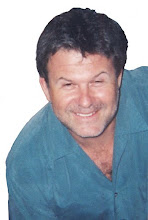
When Newsweek called Barack Obama America's "first gay president" last week for his embrace of same-sex marriage, Fred Karger had to have had mixed feelings.
Karger wanted to be America's first gay president, and not simply in the sense that Newsweek's Andrew Sullivan meant it. Karger is seeking the Republican nomination for president, a long-shot (OK, no-shot) quest that makes him the first openly gay presidential candidate from a major party in U.S. history.
He rolled into Bakersfield last week in a black campaign RV adorned with his smiling, larger-than-life mug and, surrounded by an entourage of one, made an effort to look up some old friends.
He spoke with Stan Harper, who, like Karger, made a name for himself running political campaigns for conservative candidates and causes.
Karger had hoped to meet up with old friend Ed Jagels, the former Kern County district attorney, but to no avail. Jagels led the ultimately successful 1986 effort to oust state Supreme Court Justice Rose Bird and Karger worked on the campaign.
And Karger knows a bit about what former state legislator Roy Ashburn has been going through over the past couple of years, having publicly come out as a gay man later in life himself. Karger, who is 62, made the acknowledgement at age 58.
Ashburn was 54 when the circumstances of a March 2010 DUI arrest in Sacramento essentially forced him to admit what had long been suspected by many.
Karger, who lives in Laguna Beach, says all the things a good Republican would be expected to say about the federal deficit, Obamacare, Medicare and the death penalty, but he swims against the tide on gay rights (duh) and abortion -- he's in favor of a woman's right to terminate a pregnancy.
"A pro-choice Republican, " he says, "is an even narrower niche than a gay Republican." Karger has never held elective office, but he's been on many a campaign trail, having served as a senior consultant to the campaigns of Presidents Ronald Reagan, George H.W. Bush and Gerald Ford. He was also a partner at the Dolphin Group, a California campaign consulting firm. He must be able to read tea leaves pretty well, then, right? So why this quixotic quest? Three reasons, as nearly as I can tell.
He loves tweaking nominee-apparent Mitt Romney for his policy flip-flops and especially for the Mormon Church's position on gay rights. Karger's grass-roots organization, Californians Against Hate, took on the church over its campaign to repeal the state's same-sex marriage law. (Karger's group also waged war on major Proposition 8 donors like Bakersfield's William Bolthouse.) When Salt Lake City is on the phone, Karger maintains, President Romney will take the call every time.
He relishes the fact that his campaign has actually gained a little steam: Karger outpolled Ron Paul in the March 18 Puerto Rico primary, 1.43 percent to 1.22 percent. And now he's the only Republican on the June 5 California ballot who has not formally dropped out and is not named Mitt Romney.
That makes him the last surviving anti-Romney. But the main thing that drives him: He knows that young gays are watching him. "I was walking in an Occupy New Hampshire march and this 15-year-old girl walked up to me, " Karger says. "She said, 'Are you Fred Karger?' 'I am, ' I said. And she said, 'I'm gay.' She shook my hand and just held it; we stood there for maybe 30 seconds and cried a little together. And that symbolized what I'm doing."
His gripe with the Republican Party is that its tent is too small. There's no room for new or different ideas. "It's like you're with the party on every issue, or you're against it completely, " he said. "That's got to change."
Karger is trying to help. Those windmills are tough targets, though.
Tuesday, May 22, 2012


Tuesday, February 8, 2011
The night I almost slapped down Reggie Jackson
Larry Blake's closes, famed Cal hangout
http://www.sfgate.com/cgi-bin/article.cgi?f=/c/a/2011/02/08/BUFP1HK013.DTL
When Reggie Jackson came back to the Oakland Coliseum as a member of the hated Angels to play the A's in 1982, I let him have it from the 99th row: "Jackson, you suck!" And I swear he turned up to the stands and looked right at me. After the game our obnoxious group went to Larry Blake's in Berkeley, and who do you think I ran into at the entrance? Yep, No. 44, looking large and fit. I may have soiled myself. A couple years earlier I'd landed a job bartending at Larry Blake's in Davis. That was the scene of my one and only nightclub singing appearance. I harmonized with my roommate Eli on a couple of his original songs, and I swear we did not suck. Reggie Jackson was not in the audience.
http://www.sfgate.com/cgi-bin/article.cgi?f=/c/a/2011/02/08/BUFP1HK013.DTL
When Reggie Jackson came back to the Oakland Coliseum as a member of the hated Angels to play the A's in 1982, I let him have it from the 99th row: "Jackson, you suck!" And I swear he turned up to the stands and looked right at me. After the game our obnoxious group went to Larry Blake's in Berkeley, and who do you think I ran into at the entrance? Yep, No. 44, looking large and fit. I may have soiled myself. A couple years earlier I'd landed a job bartending at Larry Blake's in Davis. That was the scene of my one and only nightclub singing appearance. I harmonized with my roommate Eli on a couple of his original songs, and I swear we did not suck. Reggie Jackson was not in the audience.
Thursday, April 29, 2010
A real-life civics lesson
Kern High School District trustee Ken Mettler believes in civic education. We know this because in 2007 he enthusiastically endorsed the creation and classroom placement of 3,000 “In God We Trust” posters declaring that “Civic Education is Fundamental.”
As valuable as those posters might be in impressing American values on the hearts and minds of Kern County students, they pale in effectiveness next to Mettler’s own vivid example.
His lesson for the kids: Our electoral process still works fine after all these years, but a little lubrication sometimes comes in handy.
Mettler, who is running for Jean Fuller’s soon-to-be-vacant 32nd Assembly District seat, has oiled things up by throwing a straw candidate into the proceedings. Faced with an opponent, Shannon Grove, from the formidable camp of political consultant Mark Abernathy, Team Mettler “invited” another Shannon — Shannon Holloway — to run against him too. Mettler’s ally and fellow trustee, The Rev. Chad Vegas, helped secure the signatures needed to qualify her candidacy. Doppleshannon would split the “Shannon” vote and lift the crafty school board trustee to victory. “It’s a political strategy,” Holloway confessed to radio host Ralph Bailey last week. The assumption behind the strategy, of course, is that voters are as malleable as sheep. Which may be correct.
In addition to demonstrating to government students across the San Joaquin Valley the depths to which some candidates will sink, Mettler, consultant Tracy Leach and their associates have struck a blow for bored campaign advisers everywhere. Politics need not be so gosh-darn serious all the time! Underhandedness adds an entertaining dimension to the enterprise that folding brochures and knocking on doors could never offer.
Of course, there’s downside to all of this for Mettler, who has always tried to position himself as the voice of the moral majority. He might come across as just another politician willing to check his honor at the door of the campaign office.
Fact is, he has shown dubious judgement before. Remember the street-corner scuffle with the No-on-Prop. 8 protester who had obtained and defaced a Yes-on-8 sign? You’d think a fiftysomething school board member would have the sense to walk away from a 21-year-old knucklehead, but instead Mettler took a swing — and was spared a juicy YouTube moment only because the camera angle wasn’t up to optimal production standards.
And you might recall the dust-up over the 2002 Rosedale Union School Board race, when incumbent trustee Mettler was charged with vandalizing an opponent’s sign by covering portions of it with white paper. The case went to trial, but the judge dismissed the charges, saying the alleged actions didn’t meet the definition of graffiti under the penal code section that Mettler was charged with.
Now, with this ham-handed attempt to confuse voters, Mettler has succeeded in the previously thought-to-be-impossible task of making the Abernathy team look like the aggrieved party.
No small chore, that. The folks from Abernathy’s Western Pacific Research have seen every trick in the book, and may have written a few.
The Abernathy crowd isn’t so clumsy they’d spell it all out in e-mails, but their footprints are at a few crime scenes. Consider the role played by candidate Phil Wyman in the 2006 GOP primary for this same 32nd Assembly District seat. When the votes were counted, it was clear that Wyman had successfully split the anti-Jean Fuller vote (i.e., the anti-Abernathy vote), resulting in Fuller’s election and the defeat of well-funded businessman Stan Ellis, a level-headed guy whose heart seemed to be in the right place. Did Abernathy recruit Wyman to enter the race? There’s no telling, but after the election, Fuller and Congressman Kevin McCarthy, a longtime Abernathy client, officially sponsored a fundraiser to pay off Wyman’s campaign debt.
There’s got to be a temptation among people who run campaigns for a living to run with the big boys and engage in a little political larceny. Campaign intrigue gets the heart beating faster. Stamping envelopes is boring. Finding ways to exploit the quirks and vulnerabilities of the multiple-candidate ballot has got to be downright fascinating.
But there’s an ethical line there somewhere that separates gamesmanship from fraud, and if Mettler, et al., didn’t cross it, they stepped on it.
Shannon Holloway dropped out of the race Friday (her name will still appear on the ballot), but her place in the annals of Kern County political shenanigans is assured. She can thank Ken Mettler for that — as can high school government teachers across the county. Lessons so rarely write themselves before our eyes.
As valuable as those posters might be in impressing American values on the hearts and minds of Kern County students, they pale in effectiveness next to Mettler’s own vivid example.
His lesson for the kids: Our electoral process still works fine after all these years, but a little lubrication sometimes comes in handy.
Mettler, who is running for Jean Fuller’s soon-to-be-vacant 32nd Assembly District seat, has oiled things up by throwing a straw candidate into the proceedings. Faced with an opponent, Shannon Grove, from the formidable camp of political consultant Mark Abernathy, Team Mettler “invited” another Shannon — Shannon Holloway — to run against him too. Mettler’s ally and fellow trustee, The Rev. Chad Vegas, helped secure the signatures needed to qualify her candidacy. Doppleshannon would split the “Shannon” vote and lift the crafty school board trustee to victory. “It’s a political strategy,” Holloway confessed to radio host Ralph Bailey last week. The assumption behind the strategy, of course, is that voters are as malleable as sheep. Which may be correct.
In addition to demonstrating to government students across the San Joaquin Valley the depths to which some candidates will sink, Mettler, consultant Tracy Leach and their associates have struck a blow for bored campaign advisers everywhere. Politics need not be so gosh-darn serious all the time! Underhandedness adds an entertaining dimension to the enterprise that folding brochures and knocking on doors could never offer.
Of course, there’s downside to all of this for Mettler, who has always tried to position himself as the voice of the moral majority. He might come across as just another politician willing to check his honor at the door of the campaign office.
Fact is, he has shown dubious judgement before. Remember the street-corner scuffle with the No-on-Prop. 8 protester who had obtained and defaced a Yes-on-8 sign? You’d think a fiftysomething school board member would have the sense to walk away from a 21-year-old knucklehead, but instead Mettler took a swing — and was spared a juicy YouTube moment only because the camera angle wasn’t up to optimal production standards.
And you might recall the dust-up over the 2002 Rosedale Union School Board race, when incumbent trustee Mettler was charged with vandalizing an opponent’s sign by covering portions of it with white paper. The case went to trial, but the judge dismissed the charges, saying the alleged actions didn’t meet the definition of graffiti under the penal code section that Mettler was charged with.
Now, with this ham-handed attempt to confuse voters, Mettler has succeeded in the previously thought-to-be-impossible task of making the Abernathy team look like the aggrieved party.
No small chore, that. The folks from Abernathy’s Western Pacific Research have seen every trick in the book, and may have written a few.
The Abernathy crowd isn’t so clumsy they’d spell it all out in e-mails, but their footprints are at a few crime scenes. Consider the role played by candidate Phil Wyman in the 2006 GOP primary for this same 32nd Assembly District seat. When the votes were counted, it was clear that Wyman had successfully split the anti-Jean Fuller vote (i.e., the anti-Abernathy vote), resulting in Fuller’s election and the defeat of well-funded businessman Stan Ellis, a level-headed guy whose heart seemed to be in the right place. Did Abernathy recruit Wyman to enter the race? There’s no telling, but after the election, Fuller and Congressman Kevin McCarthy, a longtime Abernathy client, officially sponsored a fundraiser to pay off Wyman’s campaign debt.
There’s got to be a temptation among people who run campaigns for a living to run with the big boys and engage in a little political larceny. Campaign intrigue gets the heart beating faster. Stamping envelopes is boring. Finding ways to exploit the quirks and vulnerabilities of the multiple-candidate ballot has got to be downright fascinating.
But there’s an ethical line there somewhere that separates gamesmanship from fraud, and if Mettler, et al., didn’t cross it, they stepped on it.
Shannon Holloway dropped out of the race Friday (her name will still appear on the ballot), but her place in the annals of Kern County political shenanigans is assured. She can thank Ken Mettler for that — as can high school government teachers across the county. Lessons so rarely write themselves before our eyes.
Monday, January 11, 2010
Two-thousand ten vs twenty-ten
I’ve often thought it would be fun, if I weren’t so dignified and respectable, to climb into an aluminum-foil jumpsuit and re-create a scene from a certain sci-fi movie that persists in my memory:
The disoriented time traveler finds himself on a barren desert road. He walks into a lonely, one-pump gas station and asks the grizzled old proprietor, “What year is it?” And without batting an eye, the old man answers, “Why, it’s 1948!” — as if he got that particular question as often as “Is this the road to Pearsonville?”
Last week, minus the silver jumpsuit, I got to ask that same question. And not because I’d just emerged from a time-space vortex — I simply don’t know how I’m supposed to say “2010.” Now that we’re several days into the new year, we ought to have developed some sort of consensus. But what is it? So I started asking: “What year is it?”
The two options would seem to be “two-thousand ten,” in keeping with the habit of the past 10 years (“two-thousand [and] nine,” “two- thousand [and] eight,” etc.), or “twenty-ten,” in keeping with the habit of the thousand years or so before that (“ten sixty-six,” “fourteen-ninety-two,” “seventeen-seventy-six,” etc.)
Liz Rodriguez was trying to pay for her car wash when I cornered her with the big question. “It’s twenty-ten,” she said. “Two-thousand-ten takes longer to say. My name is Elizabeth but I call myself Liz. Same reason.”
Gilbert Espinoza, the car wash customer service manager, observed with flawless logic that because last year was two-thousand-nine, this had to be two-thousand-ten.
Vanessa Guitierrez, working behind the cash register, observed that because brevity usually wins the day, this has to be twenty-ten. “Nobody said two-thousand-nine. It was oh-nine, oh-eight, oh-seven. Same deal.”
Yvonne Copeland received divine guidance on the issue. It was spelled out right on the front of last Sunday’s church program at Calvary Bible: “How to win in twenty-ten.” The shorthand answer, in case the Rev. Ted Duncan accuses you of napping through the sermon: Immerse yourself in God’s word.
Mae Leslie Strelich started the new year one way and then changed course. “I’ve actually discussed this with my 19-year-old son. He said, ‘Mom, it’s twenty-ten.’ So I guess I must have started off saying ‘two-thousand-ten.’”
It’s good to know the preferences of younger folk. This is their decade, their century, their millennium, not ours. So this matter is settled — or will be, as soon as I walk over to this teenage girl to get linguistic confirmation. Oops.
“Two-thousand-ten,” declared Brooklyn Lowe, a high school sophomore. “Twenty-ten makes thirty!”
“Yeah, two-thousand-ten rolls off the tongue,” said her mother, Wandra Lowe. “No doubt there.”
Well, there’s plenty of doubt. In 1968, Stanley Kubrick gave us “2001: A Space Odyssey,” and the titular year was pronounced “two-thousand-one.” But in 1969, the singing duo Zager and Evans warned us, “In the year twenty-five, twenty-five, if man is still alive ...” Pop culture isn’t particularly helpful here.
In fact, contradictory information is everywhere. One of county government’s most important planning documents is the 2010 General Plan, and everyone seems to pronounce it “twenty-ten.” The Winter Olympics begin Feb. 12 and the organizing committee is already referring to the big event as “Vancouver twenty-ten.”
But car makers, with a few exceptions, are talking up their “two-thousand-ten” models. That’s the auditory version supported by David Crystal, the author of the Cambridge Encyclopedia of the English Language. However, he notes, 2011 will be "twenty eleven." Go figure.
Then there’s the influence of Spanish, which can’t help but bleed a little into ordinary, daily English. KKEY-TV anchor-reporter Jaqueline Hurtado says she has heard it only one way: “Dos-mil-diez — two-thousand ten. You don’t hear people say, ‘viente diez.’” But perhaps she doesn’t go to the same car wash I do.
These are not idle questions. The answers, I think, speak to our comfort with linguistic tradition, whether we place more value on logic or convention, and whether logic and convention even apply to year-naming.
My final tally was 15 to 7 for “twenty ten” (with two inexplicable votes for “oh-ten”), but I am less convinced than when I started. I may have to ask again next week. Maybe I’ll try the foil jumpsuit.
rprice@bakersfield.com
The disoriented time traveler finds himself on a barren desert road. He walks into a lonely, one-pump gas station and asks the grizzled old proprietor, “What year is it?” And without batting an eye, the old man answers, “Why, it’s 1948!” — as if he got that particular question as often as “Is this the road to Pearsonville?”
Last week, minus the silver jumpsuit, I got to ask that same question. And not because I’d just emerged from a time-space vortex — I simply don’t know how I’m supposed to say “2010.” Now that we’re several days into the new year, we ought to have developed some sort of consensus. But what is it? So I started asking: “What year is it?”
The two options would seem to be “two-thousand ten,” in keeping with the habit of the past 10 years (“two-thousand [and] nine,” “two- thousand [and] eight,” etc.), or “twenty-ten,” in keeping with the habit of the thousand years or so before that (“ten sixty-six,” “fourteen-ninety-two,” “seventeen-seventy-six,” etc.)
Liz Rodriguez was trying to pay for her car wash when I cornered her with the big question. “It’s twenty-ten,” she said. “Two-thousand-ten takes longer to say. My name is Elizabeth but I call myself Liz. Same reason.”
Gilbert Espinoza, the car wash customer service manager, observed with flawless logic that because last year was two-thousand-nine, this had to be two-thousand-ten.
Vanessa Guitierrez, working behind the cash register, observed that because brevity usually wins the day, this has to be twenty-ten. “Nobody said two-thousand-nine. It was oh-nine, oh-eight, oh-seven. Same deal.”
Yvonne Copeland received divine guidance on the issue. It was spelled out right on the front of last Sunday’s church program at Calvary Bible: “How to win in twenty-ten.” The shorthand answer, in case the Rev. Ted Duncan accuses you of napping through the sermon: Immerse yourself in God’s word.
Mae Leslie Strelich started the new year one way and then changed course. “I’ve actually discussed this with my 19-year-old son. He said, ‘Mom, it’s twenty-ten.’ So I guess I must have started off saying ‘two-thousand-ten.’”
It’s good to know the preferences of younger folk. This is their decade, their century, their millennium, not ours. So this matter is settled — or will be, as soon as I walk over to this teenage girl to get linguistic confirmation. Oops.
“Two-thousand-ten,” declared Brooklyn Lowe, a high school sophomore. “Twenty-ten makes thirty!”
“Yeah, two-thousand-ten rolls off the tongue,” said her mother, Wandra Lowe. “No doubt there.”
Well, there’s plenty of doubt. In 1968, Stanley Kubrick gave us “2001: A Space Odyssey,” and the titular year was pronounced “two-thousand-one.” But in 1969, the singing duo Zager and Evans warned us, “In the year twenty-five, twenty-five, if man is still alive ...” Pop culture isn’t particularly helpful here.
In fact, contradictory information is everywhere. One of county government’s most important planning documents is the 2010 General Plan, and everyone seems to pronounce it “twenty-ten.” The Winter Olympics begin Feb. 12 and the organizing committee is already referring to the big event as “Vancouver twenty-ten.”
But car makers, with a few exceptions, are talking up their “two-thousand-ten” models. That’s the auditory version supported by David Crystal, the author of the Cambridge Encyclopedia of the English Language. However, he notes, 2011 will be "twenty eleven." Go figure.
Then there’s the influence of Spanish, which can’t help but bleed a little into ordinary, daily English. KKEY-TV anchor-reporter Jaqueline Hurtado says she has heard it only one way: “Dos-mil-diez — two-thousand ten. You don’t hear people say, ‘viente diez.’” But perhaps she doesn’t go to the same car wash I do.
These are not idle questions. The answers, I think, speak to our comfort with linguistic tradition, whether we place more value on logic or convention, and whether logic and convention even apply to year-naming.
My final tally was 15 to 7 for “twenty ten” (with two inexplicable votes for “oh-ten”), but I am less convinced than when I started. I may have to ask again next week. Maybe I’ll try the foil jumpsuit.
rprice@bakersfield.com
Friday, December 18, 2009
Was this ’00 decade about ‘we’ or ‘me’?
Ten years ago, I didn’t know how to spell “millennium.” Did it have one “n” or two? An “e” in the middle, or an “i”?
At the time, this was important to know because the dawn of 2000 seemed to signify something Profound and Historic, and perhaps even Apocalyptic: Would nuclear power plants and intercontinental ballistic missiles be so confused by a “00” date they would throw digital tantrums and spew radioactive haze all over the globe? The possibility of millennial disaster seemed so real that we saw runs on bottled water, size-D batteries and large-caliber ammunition.
Ten months and seven days later, Al Gore was declared the winner of the November 2000 presidential election — for about 20 minutes. It seemed like the ’00s were indeed destined to become the False Alarm Decade.
Sept. 11, 2001, was no false alarm. The outrage of those attacks had one apparent benefit, however: America suddenly found new purpose and unity. The ’00s were suddenly the “We Decade,” the flip side of the self-centered, platformed-shoed “Me Decade” of the 1970s.
But, alas, “we” didn’t fit the evolving national argument over whether America had responded properly to 9/11. “We” didn’t fit a time of political and cultural polarization like none in living memory.
Naming this decade — and we must, because we are Americans, and we name things — isn’t going be so easy. Some decades, at least in retrospect, are easy calls. The Gay Nineties. The Roaring Twenties. The Psychedelic Sixties. But naming the ’00s is a challenge best postponed, because nothing we’ve considered rings with authenticity.
The Aughts? Problem is, hardly anyone under the age of 90 knows that “aught” means “zero.”
The Oughts? As in, we really ought to have sold the house when the Realtor told us it had tripled in value.
The Oh-Oh Decade? As in, uh-oh, our PG&E bill is $800.
No, no and no.
All we can do is look at the evidence that historians and sociologists not yet born will consider. And one thing, beyond the bookend disasters of 9/11 and the Great Recession, stands out: Technology reshaped who we are and how we interact.
Social media took hold of America in the last few years of the ’00s, with 350 million users on Facebook, 100 million on MySpace, and 18 million using Twitter.
Some of us are using these platforms to communicate important things to each other. But many of us are not. To a great extent, social media are simply self-aggrandizing spotlights.
At least that’s how Rhonda Dugan, an assistant professor of sociology at Cal State Bakersfield, sees it.
“I’d call it the Decade of Self-Importance,” she said. “Everyone is networking online, but they’re not doing it just to find jobs. They’re doing it to talk about themselves. The ‘Me Decade’ was all about me. Now it’s about me and telling everyone about it. I use Facebook myself. And now I’m asking myself, ‘Why am I posting that I ran a half-marathon?’ We’ve become more narcissistic, and social media has helped push it along.”
Evidence that we’re neck-deep in an era of public narcissism goes well beyond social media; you don’t need to know the difference between a computer and Coke machine to have seen it. Anyone can be a reality TV star, or so one might think: The Balloon Boy hoax and the White House party-crashers were logical conclusions to a decade of mind-numbing self-exploitation led by Tila Tequila and “Fear Factor.”
Russell Travis, the now-retired CSUB sociology professor-turned- Portland-based philanthropist, thinks in somewhat broader terms about the soon-to-be-past decade.
“I’d call it the PTSD — the Post-Traumatic Stress Decade,” he said. That name “reflects the cumulative stress from the aftermath of two ongoing wars and the many coming home afflicted with (real) PTSD; the aftermath of a seriously tanked economy; ... and the aftermath of the 2001 bombing of the Twin Towers.”
Maybe this is how we’ve come to deal with events just too big and too profound to process — by blocking out the wider world and turning inward, going to our own, personal safe place where the mundane trumps the abstract, the ordinary blocks out the incomprehensible, and 140 characters (or less) just about covers it.
Or, better stated in a Dec. 15 tweet by MeanKrystin: “Driving to the country club. I am drinking a juice box. Rock and roll.”
rprice@bakersfield.com.
At the time, this was important to know because the dawn of 2000 seemed to signify something Profound and Historic, and perhaps even Apocalyptic: Would nuclear power plants and intercontinental ballistic missiles be so confused by a “00” date they would throw digital tantrums and spew radioactive haze all over the globe? The possibility of millennial disaster seemed so real that we saw runs on bottled water, size-D batteries and large-caliber ammunition.
Ten months and seven days later, Al Gore was declared the winner of the November 2000 presidential election — for about 20 minutes. It seemed like the ’00s were indeed destined to become the False Alarm Decade.
Sept. 11, 2001, was no false alarm. The outrage of those attacks had one apparent benefit, however: America suddenly found new purpose and unity. The ’00s were suddenly the “We Decade,” the flip side of the self-centered, platformed-shoed “Me Decade” of the 1970s.
But, alas, “we” didn’t fit the evolving national argument over whether America had responded properly to 9/11. “We” didn’t fit a time of political and cultural polarization like none in living memory.
Naming this decade — and we must, because we are Americans, and we name things — isn’t going be so easy. Some decades, at least in retrospect, are easy calls. The Gay Nineties. The Roaring Twenties. The Psychedelic Sixties. But naming the ’00s is a challenge best postponed, because nothing we’ve considered rings with authenticity.
The Aughts? Problem is, hardly anyone under the age of 90 knows that “aught” means “zero.”
The Oughts? As in, we really ought to have sold the house when the Realtor told us it had tripled in value.
The Oh-Oh Decade? As in, uh-oh, our PG&E bill is $800.
No, no and no.
All we can do is look at the evidence that historians and sociologists not yet born will consider. And one thing, beyond the bookend disasters of 9/11 and the Great Recession, stands out: Technology reshaped who we are and how we interact.
Social media took hold of America in the last few years of the ’00s, with 350 million users on Facebook, 100 million on MySpace, and 18 million using Twitter.
Some of us are using these platforms to communicate important things to each other. But many of us are not. To a great extent, social media are simply self-aggrandizing spotlights.
At least that’s how Rhonda Dugan, an assistant professor of sociology at Cal State Bakersfield, sees it.
“I’d call it the Decade of Self-Importance,” she said. “Everyone is networking online, but they’re not doing it just to find jobs. They’re doing it to talk about themselves. The ‘Me Decade’ was all about me. Now it’s about me and telling everyone about it. I use Facebook myself. And now I’m asking myself, ‘Why am I posting that I ran a half-marathon?’ We’ve become more narcissistic, and social media has helped push it along.”
Evidence that we’re neck-deep in an era of public narcissism goes well beyond social media; you don’t need to know the difference between a computer and Coke machine to have seen it. Anyone can be a reality TV star, or so one might think: The Balloon Boy hoax and the White House party-crashers were logical conclusions to a decade of mind-numbing self-exploitation led by Tila Tequila and “Fear Factor.”
Russell Travis, the now-retired CSUB sociology professor-turned- Portland-based philanthropist, thinks in somewhat broader terms about the soon-to-be-past decade.
“I’d call it the PTSD — the Post-Traumatic Stress Decade,” he said. That name “reflects the cumulative stress from the aftermath of two ongoing wars and the many coming home afflicted with (real) PTSD; the aftermath of a seriously tanked economy; ... and the aftermath of the 2001 bombing of the Twin Towers.”
Maybe this is how we’ve come to deal with events just too big and too profound to process — by blocking out the wider world and turning inward, going to our own, personal safe place where the mundane trumps the abstract, the ordinary blocks out the incomprehensible, and 140 characters (or less) just about covers it.
Or, better stated in a Dec. 15 tweet by MeanKrystin: “Driving to the country club. I am drinking a juice box. Rock and roll.”
rprice@bakersfield.com.
Wednesday, November 25, 2009
The song that once roiled America is 40 years old
By ROBERT PRICE
Merle Haggard must occasionally hear that drunk guy in his sleep. More than a few times in his long and fruitful career, the Bakersfield-born singer has been on stage, warbling in his fine baritone, when some yokel in the back bellows, “Play ‘Okie’!”
And, more often than not, Haggard, writer of hundreds of gentle and poignant jazz-country ballads, will — dare I suggest reluctantly? — oblige. Sometimes Haggard’s most famous, profitable and career-solidifying song, the one that expressed disgust with smoking marijuana, burning draft cards and those “hippies out in San Francisco,” must seem like an insufferable relative who just doesn’t know when to go home.
Forty years ago today, “Okie From Muskogee” was at the peak of its power, smack dab in the middle of a four-week run at No. 1 on the country music charts. In the span of those few weeks, Haggard cemented himself in the top tier of American entertainers.
But looking back now on “Okie,” the populist anthem Haggard has said he wrote in 10 minutes, it’s clear the song was much more than that: It was, and remains, a signpost on America’s difficult and unfulfilled journey toward self-identity.
Almost immediately upon the song’s ascent to No. 1 in November 1969, “Okie From Muskogee” was regaled as the voice of the silent majority, a revitalizing tonic for conservatives who had grown defensive and angry over Vietnam and the counter-culture movement it had helped spawn.
Of course, Haggard had been covertly political for most of his career, so covert perhaps Haggard did not fully realize it himself. “I Take a Lot of Pride in What I Am,” “Hungry Eyes” and “Workin’ Man Blues,” among others, had already firmly positioned Haggard as a man with working-class, anti-elite, populist sentiments. To a great extent, “Okie” tracked that same course.
Sociologists, historians and assorted pundits (including cultural historian and former Californian reporter Peter LaChapelle, author of 2007’s “Proud to be an Okie”) have long debated the song’s meaning and intent. Was it a parody or a sincerely indignant jab at the LSD-tripping left? At various times, Haggard has suggested both.
Haggard had no inkling what he’d created until he played the song publicly for the first time: His unveiling, at a club for noncommissioned Army officers in Fort Bragg, N.C., inspired a response so passionately rowdy that Haggard, then 32, later admitted he’d momentarily feared for his life.
The song, recorded in Hollywood on July 17 and released in August, made Haggard one of the hottest concert commodities in the country. The Atlantic Monthly described one scene on Dayton, Ohio: “… Suddenly they are on their feet, berserk, waving flags and stomping and whistling and cheering … and for those brief moments the majority isn’t silent anymore.” As a single, the song sold 264,000 copies the first year, propelling Haggard to 1970 entertainer of the year awards from both the Academy of Country Music and Country Music Association.
Some critics decried the song’s ultraconservatism; others tried to rehabilitate the song by reading it as a populist, working-class assault on middle-class snobbery and elitism. It became perhaps the most parodied songs of the Vietnam era, inspiring left-of-center knockoffs by Kinky Friedman and the Texas Jewboys (“Asshole From El Paso”), Commander Cody and His Lost Planet Airmen, and Arlo Guthrie. So many country, rock and country-rock groups released transmogrified versions of “Okie” that Rolling Stone magazine kept score: As of March 1971, the song had been recorded 20 times, with the tally standing at “Honkies, 12, Hippies, 8.”
In the context of Haggard’s lifelong body of work, it’s clear that when Haggard saw protesting college students, he didn’t just see disrespect for flag and country, he saw class distinction and privilege. He saw trust-fund snot-noses who’d never stooped over a row of cotton in their lives, never seen dirt under their own fingernails. The marijuana was one thing — and maybe not such a big thing at that — but the naïveté was quite another. If the literal weight of the lyrics was an indication, the song was less about Vietnam than about class dignity. After all, “I’m proud to be an Okie” is the song’s most repeated line.
Eventually Haggard began expressing misgivings about the song’s tendency to brand him a reactionary, preferring to explain it simply as a statement of Okie pride. When Haggard spoke at the “Oildale and Beyond” history symposium at Cal State Bakersfield Nov. 7, that was the interpretation he shared.
But conservative politicians identified a natural constituency in country music fans, and their efforts to exploit it during the Vietnam era featured Merle Haggard.
Sometimes Haggard allowed it: He of course gratefully accepted Gov. Ronald Reagan’s 1970 pardon for crimes that eventually led to his incarceration at San Quentin Prison in the late 1950s. And he accepted Richard Nixon’s invitation to the White House in 1973 to sing at wife Pat’s staid birthday party. But Haggard refused to endorse George Wallace when the Alabama governor and presidential aspirant — who was already campaigning with country-music singers singers Ernest Tubb and Marty Robbins — asked for his support in 1972. Years later he rejected similar overtures from one-time U.S. Senate candidate David Duke, the ex-Klansman.
Eventually Haggard came to the conclusion that protest “wasn’t un-American” after all. Those young Vietnam-era protesters, he told interviewer Deke Dickerson, could “see through our bigotry and our hypocrisy. ... I believe history has proven them right.”
By 2007, Haggard had moved to the center-left, if his salute to then-presidential candidate (and longtime conservative target) Hillary Clinton was an indication: “This country needs to be honest; Changes need to be large; Something like a big switch of gender; Let’s put a woman in charge.”
But Haggard has never cared much for labels. Try to put a liberal pin on his lapel and risk that scowl. Maybe his political soul is best revealed in a lesser-known song, “Somewhere in Between,” recorded a short time after “Okie” but never released: “I stand looking at the left wing, and I turn towards the right; And either side don’t look too good, examined under light; That’s just freedom of opinion, and their legal right to choose; That’s one right I hope we never lose.”
Merle Haggard must occasionally hear that drunk guy in his sleep. More than a few times in his long and fruitful career, the Bakersfield-born singer has been on stage, warbling in his fine baritone, when some yokel in the back bellows, “Play ‘Okie’!”
And, more often than not, Haggard, writer of hundreds of gentle and poignant jazz-country ballads, will — dare I suggest reluctantly? — oblige. Sometimes Haggard’s most famous, profitable and career-solidifying song, the one that expressed disgust with smoking marijuana, burning draft cards and those “hippies out in San Francisco,” must seem like an insufferable relative who just doesn’t know when to go home.
Forty years ago today, “Okie From Muskogee” was at the peak of its power, smack dab in the middle of a four-week run at No. 1 on the country music charts. In the span of those few weeks, Haggard cemented himself in the top tier of American entertainers.
But looking back now on “Okie,” the populist anthem Haggard has said he wrote in 10 minutes, it’s clear the song was much more than that: It was, and remains, a signpost on America’s difficult and unfulfilled journey toward self-identity.
Almost immediately upon the song’s ascent to No. 1 in November 1969, “Okie From Muskogee” was regaled as the voice of the silent majority, a revitalizing tonic for conservatives who had grown defensive and angry over Vietnam and the counter-culture movement it had helped spawn.
Of course, Haggard had been covertly political for most of his career, so covert perhaps Haggard did not fully realize it himself. “I Take a Lot of Pride in What I Am,” “Hungry Eyes” and “Workin’ Man Blues,” among others, had already firmly positioned Haggard as a man with working-class, anti-elite, populist sentiments. To a great extent, “Okie” tracked that same course.
Sociologists, historians and assorted pundits (including cultural historian and former Californian reporter Peter LaChapelle, author of 2007’s “Proud to be an Okie”) have long debated the song’s meaning and intent. Was it a parody or a sincerely indignant jab at the LSD-tripping left? At various times, Haggard has suggested both.
Haggard had no inkling what he’d created until he played the song publicly for the first time: His unveiling, at a club for noncommissioned Army officers in Fort Bragg, N.C., inspired a response so passionately rowdy that Haggard, then 32, later admitted he’d momentarily feared for his life.
The song, recorded in Hollywood on July 17 and released in August, made Haggard one of the hottest concert commodities in the country. The Atlantic Monthly described one scene on Dayton, Ohio: “… Suddenly they are on their feet, berserk, waving flags and stomping and whistling and cheering … and for those brief moments the majority isn’t silent anymore.” As a single, the song sold 264,000 copies the first year, propelling Haggard to 1970 entertainer of the year awards from both the Academy of Country Music and Country Music Association.
Some critics decried the song’s ultraconservatism; others tried to rehabilitate the song by reading it as a populist, working-class assault on middle-class snobbery and elitism. It became perhaps the most parodied songs of the Vietnam era, inspiring left-of-center knockoffs by Kinky Friedman and the Texas Jewboys (“Asshole From El Paso”), Commander Cody and His Lost Planet Airmen, and Arlo Guthrie. So many country, rock and country-rock groups released transmogrified versions of “Okie” that Rolling Stone magazine kept score: As of March 1971, the song had been recorded 20 times, with the tally standing at “Honkies, 12, Hippies, 8.”
In the context of Haggard’s lifelong body of work, it’s clear that when Haggard saw protesting college students, he didn’t just see disrespect for flag and country, he saw class distinction and privilege. He saw trust-fund snot-noses who’d never stooped over a row of cotton in their lives, never seen dirt under their own fingernails. The marijuana was one thing — and maybe not such a big thing at that — but the naïveté was quite another. If the literal weight of the lyrics was an indication, the song was less about Vietnam than about class dignity. After all, “I’m proud to be an Okie” is the song’s most repeated line.
Eventually Haggard began expressing misgivings about the song’s tendency to brand him a reactionary, preferring to explain it simply as a statement of Okie pride. When Haggard spoke at the “Oildale and Beyond” history symposium at Cal State Bakersfield Nov. 7, that was the interpretation he shared.
But conservative politicians identified a natural constituency in country music fans, and their efforts to exploit it during the Vietnam era featured Merle Haggard.
Sometimes Haggard allowed it: He of course gratefully accepted Gov. Ronald Reagan’s 1970 pardon for crimes that eventually led to his incarceration at San Quentin Prison in the late 1950s. And he accepted Richard Nixon’s invitation to the White House in 1973 to sing at wife Pat’s staid birthday party. But Haggard refused to endorse George Wallace when the Alabama governor and presidential aspirant — who was already campaigning with country-music singers singers Ernest Tubb and Marty Robbins — asked for his support in 1972. Years later he rejected similar overtures from one-time U.S. Senate candidate David Duke, the ex-Klansman.
Eventually Haggard came to the conclusion that protest “wasn’t un-American” after all. Those young Vietnam-era protesters, he told interviewer Deke Dickerson, could “see through our bigotry and our hypocrisy. ... I believe history has proven them right.”
By 2007, Haggard had moved to the center-left, if his salute to then-presidential candidate (and longtime conservative target) Hillary Clinton was an indication: “This country needs to be honest; Changes need to be large; Something like a big switch of gender; Let’s put a woman in charge.”
But Haggard has never cared much for labels. Try to put a liberal pin on his lapel and risk that scowl. Maybe his political soul is best revealed in a lesser-known song, “Somewhere in Between,” recorded a short time after “Okie” but never released: “I stand looking at the left wing, and I turn towards the right; And either side don’t look too good, examined under light; That’s just freedom of opinion, and their legal right to choose; That’s one right I hope we never lose.”
Thursday, November 19, 2009
A profile of Merle Haggard
I interviewed Merle Haggard and Marty Stuart for a history department symposium at Cal State Bakersfield on Nov. 7, 2009 -- an event titled "Oildale and Beyond: Interpreting the Region Through Words, Images and Music." I realized later that the event fell more or less on the 40-year anniversary of Haggard's release of his most controversial and enduring (though probably not his favorite) song, "Okie From Muskogee." The CSUB event also fell on the two-year anniversary of the release of Time-Life Records'3-disc set of Haggard songs -- an anniversary that probably means more to me than to Haggard, or anybody else for that matter, because I wrote the liner notes for that package. Here's a sampling of that profile:
•••
The court transcript reveals only spoken words, not stage directions, but the scene is easy to imagine: Bakersfield defense attorney Ralph McKnight has asked the judge to grant his client probation and spare him a prison sentence. But he can offer little to recommend that sort of judicial benevolence beyond the unwavering maternal love of one woman, seated behind him in the gallery. “This mother has tried very hard,” McKnight says, nodding toward her deferentially. The Honorable Norman F. Main looks down at the lengthy rap sheet, glances across the courtroom at anxious Flossie Haggard and then studies the defendant. “If he had tried half as hard as his mother did ....” And down deep, 20-year-old Merle Haggard knows that the judge speaks the simple, undeniable truth.
Merle Haggard apologized to his mother in song, with “Mama Tried,” which reached No. 1 in 1968. But in the half-century since that courtroom scene, Haggard’s music has more often celebrated the Sons and Daughters Who Tried — the hand-to-mouth, paycheck-to-paycheck, rent-to-own people who drove the trucks, picked the cotton, punched the time clocks and, yes, sometimes committed the crimes, both petty and grievous, as they struggled against a system that seemed weighted against them. Not just the working class but the tier below as well -- the hungry class. Haggard has sung about back doors, swingin’ doors and cell doors, but he has never strayed far from the defining themes of his life’s work: blue-collar pride and personal dignity. Basic Okieness.
The rest of the profile (rather lengthy, but worth every minute of your time) is here.
•••
The court transcript reveals only spoken words, not stage directions, but the scene is easy to imagine: Bakersfield defense attorney Ralph McKnight has asked the judge to grant his client probation and spare him a prison sentence. But he can offer little to recommend that sort of judicial benevolence beyond the unwavering maternal love of one woman, seated behind him in the gallery. “This mother has tried very hard,” McKnight says, nodding toward her deferentially. The Honorable Norman F. Main looks down at the lengthy rap sheet, glances across the courtroom at anxious Flossie Haggard and then studies the defendant. “If he had tried half as hard as his mother did ....” And down deep, 20-year-old Merle Haggard knows that the judge speaks the simple, undeniable truth.
Merle Haggard apologized to his mother in song, with “Mama Tried,” which reached No. 1 in 1968. But in the half-century since that courtroom scene, Haggard’s music has more often celebrated the Sons and Daughters Who Tried — the hand-to-mouth, paycheck-to-paycheck, rent-to-own people who drove the trucks, picked the cotton, punched the time clocks and, yes, sometimes committed the crimes, both petty and grievous, as they struggled against a system that seemed weighted against them. Not just the working class but the tier below as well -- the hungry class. Haggard has sung about back doors, swingin’ doors and cell doors, but he has never strayed far from the defining themes of his life’s work: blue-collar pride and personal dignity. Basic Okieness.
The rest of the profile (rather lengthy, but worth every minute of your time) is here.
Thursday, November 12, 2009
An update on a sick little boy
Back in September, I wrote about a 2-year-old Bakersfield boy named Garrett Hutchins, who is suffering from brain cancer. His parents brought him to City of Hope, near Los Angeles, and doctors there suggested a double auto-transplant -- but the family insurance company declined to pay for it, citing a policy against covering case trials. That was bad enough, but then the family learned that if they'd been on Medi-Cal instead of private insurance, the experimental treatment would have been covered.
Here's that entire column.
Well, I have an update from Garrett's mom, Katie Hutchins:
Hi Robert,
I just thought you may be interested in an update. Our hospital applied for authorization to have Garrett enroll in the antibody case trial that I had mentioned before. We were fully prepared for a denial - I had even researched the appeal process and was ready to go. Well, they *approved* it, even though it's still a case trial. !!!
Who knows if the article had any influence, but I would like to believe it at least got people thinking.
Thank you again for your help.
-Katie Hutchins
That's great news and, yes, I have to admit it feels good to know it's possible I had something to do with this kid getting treatment that could save his life. Katie says Garrett had been improving anyway. In any case, I'm planning to show up at the kid's sixth-grade graduation in 10 years, if they let me in the building.
Here's that entire column.
Well, I have an update from Garrett's mom, Katie Hutchins:
Hi Robert,
I just thought you may be interested in an update. Our hospital applied for authorization to have Garrett enroll in the antibody case trial that I had mentioned before. We were fully prepared for a denial - I had even researched the appeal process and was ready to go. Well, they *approved* it, even though it's still a case trial. !!!
Who knows if the article had any influence, but I would like to believe it at least got people thinking.
Thank you again for your help.
-Katie Hutchins
That's great news and, yes, I have to admit it feels good to know it's possible I had something to do with this kid getting treatment that could save his life. Katie says Garrett had been improving anyway. In any case, I'm planning to show up at the kid's sixth-grade graduation in 10 years, if they let me in the building.
Tuesday, October 13, 2009
Coffee habits and the first blast of autumn
The blustery weather inspired me to pick up a hot coffee at the corporate coffee entity that’s on my daily commute. Venti latte, please.
I asked the guy at the window if coffee sales were up now that the weather was turning, and he said things were mixed: Any gains at the drive-up were countered by fewer walk-ups.
But customers were buying their favorite drinks whether it suited the weather or not. One particular customer, for example, was still buying his daily, 6 a.m. iced caramel frappuccino, same as always.
A large man, perchance? Well, yes.
But Starbucks reports that since the chain started using 2 percent milk as the default dairy product in its drinks, waistlines have decreased ever so slightly. Starbucks estimates it saved customers 17 billion calories by swapping 2 percent milk for whole just in the first five months after making the change, and it’ll save us all nearly 5 million pounds of fat annually moving forward.
No, I have no idea how they arrived at those numbers.
Starbucks is stocking the new Wilco CD, by the way (see previous post), although most locally owned record stores have it too, and without any fat content whatsoever.
I asked the guy at the window if coffee sales were up now that the weather was turning, and he said things were mixed: Any gains at the drive-up were countered by fewer walk-ups.
But customers were buying their favorite drinks whether it suited the weather or not. One particular customer, for example, was still buying his daily, 6 a.m. iced caramel frappuccino, same as always.
A large man, perchance? Well, yes.
But Starbucks reports that since the chain started using 2 percent milk as the default dairy product in its drinks, waistlines have decreased ever so slightly. Starbucks estimates it saved customers 17 billion calories by swapping 2 percent milk for whole just in the first five months after making the change, and it’ll save us all nearly 5 million pounds of fat annually moving forward.
No, I have no idea how they arrived at those numbers.
Starbucks is stocking the new Wilco CD, by the way (see previous post), although most locally owned record stores have it too, and without any fat content whatsoever.
Cousin Herb's widow
It was a long before my time, and perhaps long before yours, but the first family of Bakersfield back in the mid-1950s was”Cousin” Herb Henson and his wife Katherine.
His daily, 45-minute TV show, “Cousin’s Herb’s Trading Post,” was on KERO-TV from 1953 to 1963. Henson, flanked by co-stars Bill Woods and Billy Mize, became a favorite throughout the valley, thanks to a signal that boosted the program well past Fresno and all the way over to the coast.
His list of guest stars over the years reads like a Music Row telephone book; Merle Haggard once called him the Ralph Emery of Bakersfield. KUZZ-FM traces its call-letter lineage to the time Henson signed on as general manager of the station formerly known as KIKK and took to calling himself “Kuzzin” Herb.
Henson died of a heart attack on Nov. 26, 1963, four days after John F. Kennedy’s assassination. He was just 38.
Now comes word that Henson’s widow, Katherine Henson Dopler, is in hospice care back in Eufaula, Okla. Eldest son Mike Henson says she is 79 and suffers from emphysema.
The update on Cousin Herb’s family comes in a roundabout fashion. Last week, I picked up the new CD by the alt-country band Wilco, “Wilco (the album),” featuring “Wilco (the song).” No, I am not making that up.
I was reminded that Wilco frontman Jeff Tweedy once told an interviewer that he came from authentic country-music stock: He’s related to Cousin Herb. Tweedy was born and raised in Belleville, Ill., and Cousin Herb was from East St. Louis, Ill., about 15 miles west.
I called Mike Henson for a review of his cousin’s latest recording and got the news about his mother — at which point his review didn’t seem to matter much. But he is proud that his cousin (third, he concluded) is making music so famously. So that particular branch of the Bakersfield Sound lives on, albeit based in Chicago.
His daily, 45-minute TV show, “Cousin’s Herb’s Trading Post,” was on KERO-TV from 1953 to 1963. Henson, flanked by co-stars Bill Woods and Billy Mize, became a favorite throughout the valley, thanks to a signal that boosted the program well past Fresno and all the way over to the coast.
His list of guest stars over the years reads like a Music Row telephone book; Merle Haggard once called him the Ralph Emery of Bakersfield. KUZZ-FM traces its call-letter lineage to the time Henson signed on as general manager of the station formerly known as KIKK and took to calling himself “Kuzzin” Herb.
Henson died of a heart attack on Nov. 26, 1963, four days after John F. Kennedy’s assassination. He was just 38.
Now comes word that Henson’s widow, Katherine Henson Dopler, is in hospice care back in Eufaula, Okla. Eldest son Mike Henson says she is 79 and suffers from emphysema.
The update on Cousin Herb’s family comes in a roundabout fashion. Last week, I picked up the new CD by the alt-country band Wilco, “Wilco (the album),” featuring “Wilco (the song).” No, I am not making that up.
I was reminded that Wilco frontman Jeff Tweedy once told an interviewer that he came from authentic country-music stock: He’s related to Cousin Herb. Tweedy was born and raised in Belleville, Ill., and Cousin Herb was from East St. Louis, Ill., about 15 miles west.
I called Mike Henson for a review of his cousin’s latest recording and got the news about his mother — at which point his review didn’t seem to matter much. But he is proud that his cousin (third, he concluded) is making music so famously. So that particular branch of the Bakersfield Sound lives on, albeit based in Chicago.
Attack of the slimy TV producer
You might be sick of reading about the David Letterman scandal, but it’s worth noting that scumbag TV producer Robert “Joe” Halderman — the guy who allegedly tried to extort $2 million from the “Late Night” talk show host — passed through these parts six years ago.
Halderman, who worked for CBS’s “48 Hours” until he was suspended earlier this month, was the executive producer of “Who Killed The Prosecutor?” That hourlong program looked into the September 2002 stabbing death of Kern County Assistant District Attorney Steve Tauzer.
Halderman was slithering around Bakersfield in late 2003, popping in at the newspaper office for research on a couple of occasions. The program aired in January 2004.
I can’t cite any specifics about Halderman’s behavior while he was here, because I can’t remember any of the conversations. I can only recall the urge to wash my hands vigorously after briefly being in the same room with him.
Halderman allegedly sent Letterman a package that threatened to reveal his sexcapades with female subordinates unless Letterman paid him. Instead, Letterman wisely chose to reveal the plot to his audience on his Oct. 1 show. Halderman, apparently deep in debt, was indicted by a grand jury and pleaded not guilty in a subsequent court appearance.
Stephanie Birkitt, a former assistant to Letterman, was apparently one of the women involved, and her diary seems to have been the source of Halderman’s information. Birkitt, who lived with Halderman after his 2004 divorce, first met the news producer while working as a page for “48 Hours.”
So, to summarize, both men slept with this particular subordinate, which makes Halderman not only an alleged extortionist but a hypocrite as well. Now, excuse me while I go wash my hands.
Halderman, who worked for CBS’s “48 Hours” until he was suspended earlier this month, was the executive producer of “Who Killed The Prosecutor?” That hourlong program looked into the September 2002 stabbing death of Kern County Assistant District Attorney Steve Tauzer.
Halderman was slithering around Bakersfield in late 2003, popping in at the newspaper office for research on a couple of occasions. The program aired in January 2004.
I can’t cite any specifics about Halderman’s behavior while he was here, because I can’t remember any of the conversations. I can only recall the urge to wash my hands vigorously after briefly being in the same room with him.
Halderman allegedly sent Letterman a package that threatened to reveal his sexcapades with female subordinates unless Letterman paid him. Instead, Letterman wisely chose to reveal the plot to his audience on his Oct. 1 show. Halderman, apparently deep in debt, was indicted by a grand jury and pleaded not guilty in a subsequent court appearance.
Stephanie Birkitt, a former assistant to Letterman, was apparently one of the women involved, and her diary seems to have been the source of Halderman’s information. Birkitt, who lived with Halderman after his 2004 divorce, first met the news producer while working as a page for “48 Hours.”
So, to summarize, both men slept with this particular subordinate, which makes Halderman not only an alleged extortionist but a hypocrite as well. Now, excuse me while I go wash my hands.
Tuesday, September 22, 2009
Staying out of the ditch: me and the county fair
I hate carnival rides. I hate nausea and disorientation and losing all my pocket change. If I want to spin or shake or fly around through the air, I’ll drive my car into a ditch.
As I stroll the fairgrounds, I sometimes find myself distracted by women, especially those who lack obvious facial tattoos. But giving in to such distractions raises an unavoidable issue: My wife. Being married means getting elbowed in the rib cage every time my head turns. If I want sore ribs, I’ll drive my car into a ditch.
I’m not thrilled by dime-toss games anymore. At one particular fair several years ago, my dead-eyelob shot won about a half-dozen of those cheap, paper-thin, beer-label drinking glasses. They were all broken within a month. If I want broken glass, I’ll drive my car into a ditch.
No, there’s only one thing about the Kern County Fair that interests me: Greasy food, spicy food, tangy food, sugary food. In general, food.
This is the one time of year when I try to justify dietary irresponsibility, the one time (well, except for Thanksgiving and six or eight other occasions) when I pretend I still have the metabolism of a 14-year-old.
Corn dogs on the main promenade, slathered with mustard. Mini-taco platters at the Mexican village, buried under an inch-thick layer of salsa. Egg rolls. Cinnamon rolls.
And, on the way back to the car, right after the annual family-of-four-in-the-photo-booth thing, the obligatory bag of caramel corn.
I don’t eat this way all the time.
Really. I wouldn’t be able to see the space bar on my keyboard if I were totally without shame.
But this is the fair: I can go back to eating responsibly next month. Fair food, to me, makes the whole two-week affair worthwhile.
What better enticements does the fair offer? Not all that much.
Let’s see: I enjoy going into the exhibition halls and watching pitchpersons with wireless headset mikes trying to sell non-stick pans and never-dull cutlery. (Warning: Never allow yourself to actually appear interested or you may become part of the presentation. I was once forced to comment publicly on the dust-attracting prowess of the Wonder Broom. Wow! It’s really amazing!)
I enjoy watching the joy-terror on the face of my pre-schooler as he circles around in a tiny helicopter at the breakneck speed of 3 mph. Even at this age, like his older sister before him, he is trying to perfect the art of appearing nonchalant while privately wondering about the credentials of the carny-in-charge.
I enjoy hearing the shrieks cascade down from the bungee jumping attraction, though I am smart enough to keep my distance. For one thing, I don’t want to get caught up in any dares. For another, I understand rudimentary intestinal chemistry: Eight beers plus a cone of soft-serve plus an order of nachos, churned violently, equals ... well, you get the picture.
That’s the beauty of the fair. You get to see things you don’t normally get to see (and probably wouldn’t otherwise care to see). Bodies flying through the air. Rows of stuffed Garfields. Rows of Metallica posters. Packs of fairgoers who actually own Metallica posters. Those L.A. deejays, Mark & Brian. People willing to stick objects up their nose in order to impress Mark & Brian.
I’m not normally interested in calf roping or steer wrestling, and I seem to be able to get through the entire year without viewing 90-pound zucchinis or sitting through cheerleading competitions. But I usually end up doing so during the fair’s run, if only because you might as well do something while the digestion process works its magic.
I should note that I’m very proud of my digestive system. But I’m no super-human: I have to draw the line somewhere.
A guy can’t process a chili burger in just any old place. That’s why I steer clear of the calf-birthing area. I have come to realize that the livestock pens are generally not goodplaces to enjoy fair cuisine. Nothing personal, kids: I have only the greatest admiration for the 4-H Club. I’ll support your endeavors 100 percent, as long as I can do so upwind.
Here, for the record, I would like to state my appreciation for farmers and ranchers, as well as 4-H’ers, carnies, metal-heads, deejays and the people who sell those white, 3-foot-long inflatable space shuttles.
Speaking of which, have you see people trying to lug those things around during the fair? Yikes. If I want a massive, white, inflatable thing smacking me in the face, I’ll drive my car into a ditch.
I wrote this in September 2000. My kids don't like to hang around me at the fair anymore, except for the time it takes to ask for and receive money. I have long since given up on trying to cram all four family members into a single photo booth.
As I stroll the fairgrounds, I sometimes find myself distracted by women, especially those who lack obvious facial tattoos. But giving in to such distractions raises an unavoidable issue: My wife. Being married means getting elbowed in the rib cage every time my head turns. If I want sore ribs, I’ll drive my car into a ditch.
I’m not thrilled by dime-toss games anymore. At one particular fair several years ago, my dead-eyelob shot won about a half-dozen of those cheap, paper-thin, beer-label drinking glasses. They were all broken within a month. If I want broken glass, I’ll drive my car into a ditch.
No, there’s only one thing about the Kern County Fair that interests me: Greasy food, spicy food, tangy food, sugary food. In general, food.
This is the one time of year when I try to justify dietary irresponsibility, the one time (well, except for Thanksgiving and six or eight other occasions) when I pretend I still have the metabolism of a 14-year-old.
Corn dogs on the main promenade, slathered with mustard. Mini-taco platters at the Mexican village, buried under an inch-thick layer of salsa. Egg rolls. Cinnamon rolls.
And, on the way back to the car, right after the annual family-of-four-in-the-photo-booth thing, the obligatory bag of caramel corn.
I don’t eat this way all the time.
Really. I wouldn’t be able to see the space bar on my keyboard if I were totally without shame.
But this is the fair: I can go back to eating responsibly next month. Fair food, to me, makes the whole two-week affair worthwhile.
What better enticements does the fair offer? Not all that much.
Let’s see: I enjoy going into the exhibition halls and watching pitchpersons with wireless headset mikes trying to sell non-stick pans and never-dull cutlery. (Warning: Never allow yourself to actually appear interested or you may become part of the presentation. I was once forced to comment publicly on the dust-attracting prowess of the Wonder Broom. Wow! It’s really amazing!)
I enjoy watching the joy-terror on the face of my pre-schooler as he circles around in a tiny helicopter at the breakneck speed of 3 mph. Even at this age, like his older sister before him, he is trying to perfect the art of appearing nonchalant while privately wondering about the credentials of the carny-in-charge.
I enjoy hearing the shrieks cascade down from the bungee jumping attraction, though I am smart enough to keep my distance. For one thing, I don’t want to get caught up in any dares. For another, I understand rudimentary intestinal chemistry: Eight beers plus a cone of soft-serve plus an order of nachos, churned violently, equals ... well, you get the picture.
That’s the beauty of the fair. You get to see things you don’t normally get to see (and probably wouldn’t otherwise care to see). Bodies flying through the air. Rows of stuffed Garfields. Rows of Metallica posters. Packs of fairgoers who actually own Metallica posters. Those L.A. deejays, Mark & Brian. People willing to stick objects up their nose in order to impress Mark & Brian.
I’m not normally interested in calf roping or steer wrestling, and I seem to be able to get through the entire year without viewing 90-pound zucchinis or sitting through cheerleading competitions. But I usually end up doing so during the fair’s run, if only because you might as well do something while the digestion process works its magic.
I should note that I’m very proud of my digestive system. But I’m no super-human: I have to draw the line somewhere.
A guy can’t process a chili burger in just any old place. That’s why I steer clear of the calf-birthing area. I have come to realize that the livestock pens are generally not goodplaces to enjoy fair cuisine. Nothing personal, kids: I have only the greatest admiration for the 4-H Club. I’ll support your endeavors 100 percent, as long as I can do so upwind.
Here, for the record, I would like to state my appreciation for farmers and ranchers, as well as 4-H’ers, carnies, metal-heads, deejays and the people who sell those white, 3-foot-long inflatable space shuttles.
Speaking of which, have you see people trying to lug those things around during the fair? Yikes. If I want a massive, white, inflatable thing smacking me in the face, I’ll drive my car into a ditch.
I wrote this in September 2000. My kids don't like to hang around me at the fair anymore, except for the time it takes to ask for and receive money. I have long since given up on trying to cram all four family members into a single photo booth.
Sunday, September 6, 2009
Blowing in from the west, a twangy memory of the past
The first song I ever learned on the guitar, back in my Petaluma parks and rec summer class, lo, those many years ago, was a response to Merle Haggard’s “Okie from Muskogee.”
It was Jesse Colin Young’s “Hippie from Olema,” an amusing retort sung to the tune of Haggard’s redneck anthem of conserva tive pride. Where Haggard had written, “We don’t grow our hair out long and shaggy,” the leader of the Youngbloods had written, “We don’t spill our oil out in the ocean.” I was subsisting on a steady sugar diet of AM radio pop at the time, but even I picked up on the serious cultural disconnect in evidence.
So when Amanda Eichstaedt e-mailed me a couple of months ago to ask about Bakersfield music, I couldn’t help but be distracted by the small irony attached to her return address: Olema. Yes, a resident of the original Hippieville, 20 miles through the west Marin backcountry from the stomping grounds of my bewildered youth, was writing to inquire about Merle Haggard and friends.
Eichstaedt and collaborator Mike Varley co-host an every-other-Thursday-evening program on KWMR, a charming, appealingly eclectic radio station in Point Reyes, just over the hill from Olema. The show is called “Bakersfield and Beyond,” and it’s worth bookmarking on your computer. (Go to kwmr.org and click on the cow icon to get streaming live audio of the two-hour show.)
Fans of Buck and Merle will find something to like here, but that’s not what makes “Bakersfield and Beyond” a great show. Eichstaedt and Varley may have come late to the Bakersfield Sound party, but they’ve managed to locate and restore a story line that, with a very few notable exceptions, petered out sometime in the mid-1970s.
The story line is this: A unique new genre of distinctly American music, born of folk, blues, Western swing and rockabilly, spiced with sweat, sunburn and a double helping of class resentment, finds a place in the broader popular consciousness. The Bakersfield Sound starts out as the music of independence and rebellion but, like so many other cultural insurgencies, it gradually evolves into a copy of the mainstream product, so indistinguishable it ceases to exist except in memory. Buck Owens himself lamented its passing.
But “Bakersfield and Beyond” reminds us that the spirit of that music is still kicking around — in expected places, like Austin, Texas, and L.A., but also in unexpected places like Calgary, Alberta, where singer-songwriter Tim Hus presses on the best traditions of Billy Mize and Tommy Collins.
And, thank God, in Bakersfield, too: Eichstaedt and Varley served up some Big House last Thursday (“Louisiana in the Rain”), as well as Fatt Katt and Von Zippers (“Rockin’ and Rollin’ Tonight”). Another local, Bruce Theissen, aka Dr. BLT, is a regular call-in guest; his astonishing, barely recognizable rendition of Michael Jackson’s “Billie Jean” a few weeks ago was lonely enough to have made Johnny Cash cry. No, seriously.
In November 2008, Eichstaedt, who already had an interview show on KWMR, was asked to cover the station’s Thursday night slot for four shows. She knew Varley through bicycling — Varley owns the local bike shop, and she is chairwoman of the board of the League of American Bicyclists, a national cycling advocacy group.
She knew their musical tastes were similar and vast, so she asked him to sit in with her. They pulled out some Dave Alvin and some John Doe & the Sadies — familiar names to anyone who frequents Bakersfield’s Fishlips club — along with Vancouver-based Neko Case, who toured with Haggard two years ago. Research helped them realize those performers had a lot in common with the Bakersfield Sound.
They didn’t know much about Bakersfield music, however, and they readily admitted it to their listening audience on that first broadcast. Was there really even such a thing? “Immediately we got a call from a friend who could not believe that, a) we did not know what the Bakersfield Sound was, and, b) we would actually admit it on the air,” Eichstaedt wrote in a recent e-mail.
In the eight months since their debut, they’re uncovered quite a few of Bakersfield’s musical progeny. But they’ve also fallen in love with Rose Maddox, Little Jimmy Dickens, Wanda Jackson and Ferlin Husky, in addition to Buck and Merle.
Depending on how you define the Bakersfield Sound, they might now know more about the genre now than any living man or woman, including those who lived it. Not that they would ever make such a boast: They are properly humble and self-deprecating about their new-found expertise. And now that they’ve actually visited Mecca — last month they caught Dave Alvin and the Guilty Women at Fishlips and Buddy Owens and the Buckaroos at the Crystal Palace — they may qualify for Ph.D’s in honky tonk.
Meanwhile, in Bakersfield, the city’s lone country station plays Nashville hits, and half the dial is given over to hip-hop. Son Volt? Rosie Flores? Who are they? To a far greater extent than we might want to admit, Bakersfield has lost an important part of its musical identity. Fortunately, others have found pleasing remnants of it. Even a couple of bike-riding hippies from Olema.
Reach Robert Price at rprice@bakersfield.com or www.stubblebuzz.com.
It was Jesse Colin Young’s “Hippie from Olema,” an amusing retort sung to the tune of Haggard’s redneck anthem of conserva tive pride. Where Haggard had written, “We don’t grow our hair out long and shaggy,” the leader of the Youngbloods had written, “We don’t spill our oil out in the ocean.” I was subsisting on a steady sugar diet of AM radio pop at the time, but even I picked up on the serious cultural disconnect in evidence.
So when Amanda Eichstaedt e-mailed me a couple of months ago to ask about Bakersfield music, I couldn’t help but be distracted by the small irony attached to her return address: Olema. Yes, a resident of the original Hippieville, 20 miles through the west Marin backcountry from the stomping grounds of my bewildered youth, was writing to inquire about Merle Haggard and friends.
Eichstaedt and collaborator Mike Varley co-host an every-other-Thursday-evening program on KWMR, a charming, appealingly eclectic radio station in Point Reyes, just over the hill from Olema. The show is called “Bakersfield and Beyond,” and it’s worth bookmarking on your computer. (Go to kwmr.org and click on the cow icon to get streaming live audio of the two-hour show.)
Fans of Buck and Merle will find something to like here, but that’s not what makes “Bakersfield and Beyond” a great show. Eichstaedt and Varley may have come late to the Bakersfield Sound party, but they’ve managed to locate and restore a story line that, with a very few notable exceptions, petered out sometime in the mid-1970s.
The story line is this: A unique new genre of distinctly American music, born of folk, blues, Western swing and rockabilly, spiced with sweat, sunburn and a double helping of class resentment, finds a place in the broader popular consciousness. The Bakersfield Sound starts out as the music of independence and rebellion but, like so many other cultural insurgencies, it gradually evolves into a copy of the mainstream product, so indistinguishable it ceases to exist except in memory. Buck Owens himself lamented its passing.
But “Bakersfield and Beyond” reminds us that the spirit of that music is still kicking around — in expected places, like Austin, Texas, and L.A., but also in unexpected places like Calgary, Alberta, where singer-songwriter Tim Hus presses on the best traditions of Billy Mize and Tommy Collins.
And, thank God, in Bakersfield, too: Eichstaedt and Varley served up some Big House last Thursday (“Louisiana in the Rain”), as well as Fatt Katt and Von Zippers (“Rockin’ and Rollin’ Tonight”). Another local, Bruce Theissen, aka Dr. BLT, is a regular call-in guest; his astonishing, barely recognizable rendition of Michael Jackson’s “Billie Jean” a few weeks ago was lonely enough to have made Johnny Cash cry. No, seriously.
In November 2008, Eichstaedt, who already had an interview show on KWMR, was asked to cover the station’s Thursday night slot for four shows. She knew Varley through bicycling — Varley owns the local bike shop, and she is chairwoman of the board of the League of American Bicyclists, a national cycling advocacy group.
She knew their musical tastes were similar and vast, so she asked him to sit in with her. They pulled out some Dave Alvin and some John Doe & the Sadies — familiar names to anyone who frequents Bakersfield’s Fishlips club — along with Vancouver-based Neko Case, who toured with Haggard two years ago. Research helped them realize those performers had a lot in common with the Bakersfield Sound.
They didn’t know much about Bakersfield music, however, and they readily admitted it to their listening audience on that first broadcast. Was there really even such a thing? “Immediately we got a call from a friend who could not believe that, a) we did not know what the Bakersfield Sound was, and, b) we would actually admit it on the air,” Eichstaedt wrote in a recent e-mail.
In the eight months since their debut, they’re uncovered quite a few of Bakersfield’s musical progeny. But they’ve also fallen in love with Rose Maddox, Little Jimmy Dickens, Wanda Jackson and Ferlin Husky, in addition to Buck and Merle.
Depending on how you define the Bakersfield Sound, they might now know more about the genre now than any living man or woman, including those who lived it. Not that they would ever make such a boast: They are properly humble and self-deprecating about their new-found expertise. And now that they’ve actually visited Mecca — last month they caught Dave Alvin and the Guilty Women at Fishlips and Buddy Owens and the Buckaroos at the Crystal Palace — they may qualify for Ph.D’s in honky tonk.
Meanwhile, in Bakersfield, the city’s lone country station plays Nashville hits, and half the dial is given over to hip-hop. Son Volt? Rosie Flores? Who are they? To a far greater extent than we might want to admit, Bakersfield has lost an important part of its musical identity. Fortunately, others have found pleasing remnants of it. Even a couple of bike-riding hippies from Olema.
Reach Robert Price at rprice@bakersfield.com or www.stubblebuzz.com.
Saturday, September 5, 2009
The day the president gave a speech to the nation's children from her classroom
Cynthia Mostoller has always believed in bringing history to life. Through the years, she has brought in professional historians, designed Revolutionary War-era newspapers, held birthday celebrations for important but neglected women, and led rousing in-class renditions of American folk songs like “Yankee Doodle.”
Mostoller, an eighth-grade history teacher at Alice Deal Junior High in northwest Washington, D.C., doesn’t have many students falling asleep in class. She certainly didn’t have any students snoozing when President Bush the First addressed the nation’s students from her classroom in 1991, and she doesn’t expect to have any snoozing on Tuesday, when President Obama addresses kids on a similar topic — the importance of education.
This week, via e-mail, I asked Mostoller about those rare occasions when presidents give speeches addressed directly to children.
First, it bears noting that this is a teacher who takes her calling seriously. For years, as the Washington Post noted in 2005, Mostoller has trained other teachers, and used a curriculum she created herself to present U.S. history from Colonial times through 1900.
Her personal connections have helped create unusual and fascinating opportunities for her students. One day in 2005, for example, some of her students led the pledge of allegiance at the National Archives when President George W. Bush dedicated the renovated rotunda that displays the Declaration of Independence, Constitution and Bill of Rights.
Hers is a unique American story. Born on a farm in Ohio, she married right out of high school and immediately started spending her days shopping and cooking for farmhands. But she went back to school, got her degree in history from the University of Akron, and in 1985 took on a life-changing trip to the nation’s capital. In Washington for a conference, she stopped in at the school district office to ask about teaching in the D.C. school system.
As she was preparing to go home, the principal of Deal Junior High called and offered her a job. A history teacher had died two days before classes were to begin.
Mostoller is lukewarm about using the Internet for studies of history and skeptical about such things as “standards” and “critical thinking” because, as she told the Post for the first of the newspaper’s 2005 profiles on educational innovators, they “don’t mean anything to the kids.”
Back in October 1991, when President George H.W. Bush spoke to America’s schoolchildren via live TV hookup, he was speaking from her classroom.
“You know, all over America, thousands of schools do succeed, even against tough odds, even against all odds,” Bush said that day. “Kids from all over the District of Columbia petition to get into Alice Deal School here because parents know this school works. It works because of teachers like the one standing over here, Ms. Mostoller, ... decided at the age of 25 that she wanted to teach.
“She was standing in a supermarket checkout line when she saw a magazine ad about college. She went back to school, worked her way through in seven years, waiting tables to pay tuition. She made it, and so can you,” Bush said.
I asked Mostoller what she remembered about Bush’s 1991 speech, what she thought the impact of Obama’s speech might be, and her opinion of the protests about his address.
“I spent some time going through my video of the 1991 visit as well as the newspaper clippings and photographs of the (Bush) event,” she wrote back on Saturday.
“His message that day was the same as the one I expect President Obama to make on Tuesday: Go to bed early, get to school on time, complete your assignments as best as you can, and work toward a rewarding future. Seems like the good, old-fashioned midwestern values I grew up with in Ohio.”
Mostoller expressed disappointment and bafflement at the way some conservatives are portraying Obama’s speech.
“I don’t understand the partisan controversy behind this,” she wrote. “Every president, every year, should start the school year with a message of hope and inspiration. Who better than the one person we elected to advocate for our best interests?”
Partisan politics — and that’s what’s behind this current controversy — has no place in the classroom. It didn’t when Bush chose Mostoller’s classroom for his 1991 pep talk.
“My students in 1991 were much less concerned about his political affiliation than they were having the opportunity to meet the president and be on TV,” she wrote. “The hate-mongers and political pundits looking for trouble where there is none need to give it a rest. Public education is one of the pillars of our free society. We support it with tax dollars because we appreciate its inherent value. We should worry when the president is not interested in promoting education.”
So it’s come to this? People fear a president’s interest in public education so much they’ll pull their kids out of class?
“(Addressing the importance of education) seems like a no-brainer and I regret very much that the few rabble-rousers out there with hurtful agendas have been given so much attention,” Mostoller wrote.
“There were a lot of wonderful kids sitting in my room that day — and many have gone on to be successful adults.
“Did his speech in 1991 change the world? Maybe not, but it did introduce public education into the national agenda in a way that hadn’t been done since the space race of the 1960s. Let’s hope Obama’s speech re-invigorates our engagement in education. Our future depends on it.”
Wise words from a teacher who sees the big picture.
Mostoller, an eighth-grade history teacher at Alice Deal Junior High in northwest Washington, D.C., doesn’t have many students falling asleep in class. She certainly didn’t have any students snoozing when President Bush the First addressed the nation’s students from her classroom in 1991, and she doesn’t expect to have any snoozing on Tuesday, when President Obama addresses kids on a similar topic — the importance of education.
This week, via e-mail, I asked Mostoller about those rare occasions when presidents give speeches addressed directly to children.
First, it bears noting that this is a teacher who takes her calling seriously. For years, as the Washington Post noted in 2005, Mostoller has trained other teachers, and used a curriculum she created herself to present U.S. history from Colonial times through 1900.
Her personal connections have helped create unusual and fascinating opportunities for her students. One day in 2005, for example, some of her students led the pledge of allegiance at the National Archives when President George W. Bush dedicated the renovated rotunda that displays the Declaration of Independence, Constitution and Bill of Rights.
Hers is a unique American story. Born on a farm in Ohio, she married right out of high school and immediately started spending her days shopping and cooking for farmhands. But she went back to school, got her degree in history from the University of Akron, and in 1985 took on a life-changing trip to the nation’s capital. In Washington for a conference, she stopped in at the school district office to ask about teaching in the D.C. school system.
As she was preparing to go home, the principal of Deal Junior High called and offered her a job. A history teacher had died two days before classes were to begin.
Mostoller is lukewarm about using the Internet for studies of history and skeptical about such things as “standards” and “critical thinking” because, as she told the Post for the first of the newspaper’s 2005 profiles on educational innovators, they “don’t mean anything to the kids.”
Back in October 1991, when President George H.W. Bush spoke to America’s schoolchildren via live TV hookup, he was speaking from her classroom.
“You know, all over America, thousands of schools do succeed, even against tough odds, even against all odds,” Bush said that day. “Kids from all over the District of Columbia petition to get into Alice Deal School here because parents know this school works. It works because of teachers like the one standing over here, Ms. Mostoller, ... decided at the age of 25 that she wanted to teach.
“She was standing in a supermarket checkout line when she saw a magazine ad about college. She went back to school, worked her way through in seven years, waiting tables to pay tuition. She made it, and so can you,” Bush said.
I asked Mostoller what she remembered about Bush’s 1991 speech, what she thought the impact of Obama’s speech might be, and her opinion of the protests about his address.
“I spent some time going through my video of the 1991 visit as well as the newspaper clippings and photographs of the (Bush) event,” she wrote back on Saturday.
“His message that day was the same as the one I expect President Obama to make on Tuesday: Go to bed early, get to school on time, complete your assignments as best as you can, and work toward a rewarding future. Seems like the good, old-fashioned midwestern values I grew up with in Ohio.”
Mostoller expressed disappointment and bafflement at the way some conservatives are portraying Obama’s speech.
“I don’t understand the partisan controversy behind this,” she wrote. “Every president, every year, should start the school year with a message of hope and inspiration. Who better than the one person we elected to advocate for our best interests?”
Partisan politics — and that’s what’s behind this current controversy — has no place in the classroom. It didn’t when Bush chose Mostoller’s classroom for his 1991 pep talk.
“My students in 1991 were much less concerned about his political affiliation than they were having the opportunity to meet the president and be on TV,” she wrote. “The hate-mongers and political pundits looking for trouble where there is none need to give it a rest. Public education is one of the pillars of our free society. We support it with tax dollars because we appreciate its inherent value. We should worry when the president is not interested in promoting education.”
So it’s come to this? People fear a president’s interest in public education so much they’ll pull their kids out of class?
“(Addressing the importance of education) seems like a no-brainer and I regret very much that the few rabble-rousers out there with hurtful agendas have been given so much attention,” Mostoller wrote.
“There were a lot of wonderful kids sitting in my room that day — and many have gone on to be successful adults.
“Did his speech in 1991 change the world? Maybe not, but it did introduce public education into the national agenda in a way that hadn’t been done since the space race of the 1960s. Let’s hope Obama’s speech re-invigorates our engagement in education. Our future depends on it.”
Wise words from a teacher who sees the big picture.
Tuesday, August 18, 2009
Hey U-Verse, I want my MTV -- er, GOV-TV
I recently signed up for AT&T’s new digital cable service, U-Verse, and I have to say I’m reasonably satisfied with it, except for one thing. (Well, two things, if you include the four- to five-minute wait to get a real, living, breathing person on the toll-free help line.)
Where’s KGOV? You know, the Kern County government television station that broadcasts Board of Supervisors and Bakersfield City Council meetings, among other important programming. Answer: Coming soon —but maybe not on Channel 16, the easily accessible place on the dial where Bright House and virtually every other Kern County cable provider has positioned the not-for-profit government station.
AT&T is likely to add KGOV in October, but it plans on putting the station on Channel 99. That’s inconvenient enough, but here’s the thing: Viewers will then have to cursor through a secondary menu to find KGOV broadcasting.
That’s just not acceptable. KGOV provides a wealth of essential information. The airing (and re-airing) of local government meetings puts hundreds of thousands of Kern County residents in position to participate in this thing we call democracy. In a time when rumor and exaggeration seem to drive the public debate, we need unfiltered access to the business of government more than ever.
The 200-channel U-Verse package I signed up for has four MTV stations, 15 or 16 sports channels, and more shopping networks than I can count. Is U-Verse really saying that that stuff outranks local government (and its management of our tax dollars and community resources) in importance? I hope not. But if AT&T plans to force viewers to jump through hoops just to stay abreast of such things, it sure seems like the intimation.
Consider this, too: U-Verse may actually be violating state law by relegating KGOV to Channel 99.
The Digital Infrastructure and Video Competition Act of 2006, or DIVCA, which sets the rules for government access programming by cable companies, stipulates (in Section 5370, part B) that “the channel numbers for the PEG (Public Education and Governmental) channels shall be the same channel numbers used by the incumbent cable operator unless prohibited by federal law.”
For most viewers, "the incumbent cable operator" is Bright House, and in Kern County, that’s Channel 16.
Kern County legislators need to step in and remind AT&T of its obligations under DIVCA. The rest of us ought to remind AT&T of its obligation as a corporate member of this community — to further that cause of participatory government in every feasible way. Surely this is feasible.
Where’s KGOV? You know, the Kern County government television station that broadcasts Board of Supervisors and Bakersfield City Council meetings, among other important programming. Answer: Coming soon —but maybe not on Channel 16, the easily accessible place on the dial where Bright House and virtually every other Kern County cable provider has positioned the not-for-profit government station.
AT&T is likely to add KGOV in October, but it plans on putting the station on Channel 99. That’s inconvenient enough, but here’s the thing: Viewers will then have to cursor through a secondary menu to find KGOV broadcasting.
That’s just not acceptable. KGOV provides a wealth of essential information. The airing (and re-airing) of local government meetings puts hundreds of thousands of Kern County residents in position to participate in this thing we call democracy. In a time when rumor and exaggeration seem to drive the public debate, we need unfiltered access to the business of government more than ever.
The 200-channel U-Verse package I signed up for has four MTV stations, 15 or 16 sports channels, and more shopping networks than I can count. Is U-Verse really saying that that stuff outranks local government (and its management of our tax dollars and community resources) in importance? I hope not. But if AT&T plans to force viewers to jump through hoops just to stay abreast of such things, it sure seems like the intimation.
Consider this, too: U-Verse may actually be violating state law by relegating KGOV to Channel 99.
The Digital Infrastructure and Video Competition Act of 2006, or DIVCA, which sets the rules for government access programming by cable companies, stipulates (in Section 5370, part B) that “the channel numbers for the PEG (Public Education and Governmental) channels shall be the same channel numbers used by the incumbent cable operator unless prohibited by federal law.”
For most viewers, "the incumbent cable operator" is Bright House, and in Kern County, that’s Channel 16.
Kern County legislators need to step in and remind AT&T of its obligations under DIVCA. The rest of us ought to remind AT&T of its obligation as a corporate member of this community — to further that cause of participatory government in every feasible way. Surely this is feasible.
Monday, August 17, 2009
Laura Dennison: Faithful servant of democracy
If you missed the obituary notices in the Aug. 16 Bakersfield Californian, you may have failed to take note of the passing of a gentle and dignified champion of democracy.
Laura Dennison, a former president of the Kern County League of Women Voters, died Aug. 6 in the Southern California city of Claremont, having moved there in 2007 after 15 years in Bakersfield. She was 81 and had cancer.
Dennison helped revitalize a somewhat moribund LWV organization when she assumed the leadership reins a decade ago, and she was active in assorted causes even in semi-retirement.
In June 2007, Dennison, who suffered from asthma, came out in favor of SB719, which added medical and scientific members to the valley air pollution control board.
In February 2007, she urged recalcitrant Bakersfield City Councilman Ken Weir to disclose his economic interests. “I don’t see why Mr. Weir should be an exception (to conflict of interest laws),” she said. “I think transparency is very important.”
In fact, transparency in government was an ideal Dennison held dear, essential as it was to one of her chief missions in life: participation in government by the American citizenry.
She will be missed.
Laura Dennison, a former president of the Kern County League of Women Voters, died Aug. 6 in the Southern California city of Claremont, having moved there in 2007 after 15 years in Bakersfield. She was 81 and had cancer.
Dennison helped revitalize a somewhat moribund LWV organization when she assumed the leadership reins a decade ago, and she was active in assorted causes even in semi-retirement.
In June 2007, Dennison, who suffered from asthma, came out in favor of SB719, which added medical and scientific members to the valley air pollution control board.
In February 2007, she urged recalcitrant Bakersfield City Councilman Ken Weir to disclose his economic interests. “I don’t see why Mr. Weir should be an exception (to conflict of interest laws),” she said. “I think transparency is very important.”
In fact, transparency in government was an ideal Dennison held dear, essential as it was to one of her chief missions in life: participation in government by the American citizenry.
She will be missed.
Thursday, July 30, 2009
Take the Bakersfield Sound tour
There's something about physical proximity to cultural history. Got your camera? You can tour movie stars' homes in and around Hollywood. You can take Chicago's Untouchables Tour and visit scenes of assorted mob hits. You can even touch the hallowed Harlem asphalt where hip-hop music was born. Just wash your hands afterward.
You can also visit the spots where the Bakersfield Sound, that trebly, concrete-floored strain of distinctly American music, was born half a century ago -- but it's a do-it-yourself thing.
A few years ago, the Bakersfield Convention and Visitors Bureau tried to market a self-guided tour of Bakersfield-area spots of note: the converted boxcar in Oildale where Merle Haggard grew up, tough and wild; the broom closet-sized building near Baker Street where a third-tier country star named Buck Owens recorded rockabilly records under a pseudonym; even the long-defunct dance club where performers like Lefty Frizzell inspired a generation of young, poor Oklahoma transplants -- including some who played guitar.
The Convention and Visitors Bureau's semi-organized tour never really came off, but that doesn't mean you can't undertake your own Bakersfield Sound Tour, a distinctly unglamorous excursion through central Kern County. From a 2005 article, here's the whole thing, right down to suggestions for accompanying songs.
Enjoy.
You can also visit the spots where the Bakersfield Sound, that trebly, concrete-floored strain of distinctly American music, was born half a century ago -- but it's a do-it-yourself thing.
A few years ago, the Bakersfield Convention and Visitors Bureau tried to market a self-guided tour of Bakersfield-area spots of note: the converted boxcar in Oildale where Merle Haggard grew up, tough and wild; the broom closet-sized building near Baker Street where a third-tier country star named Buck Owens recorded rockabilly records under a pseudonym; even the long-defunct dance club where performers like Lefty Frizzell inspired a generation of young, poor Oklahoma transplants -- including some who played guitar.
The Convention and Visitors Bureau's semi-organized tour never really came off, but that doesn't mean you can't undertake your own Bakersfield Sound Tour, a distinctly unglamorous excursion through central Kern County. From a 2005 article, here's the whole thing, right down to suggestions for accompanying songs.
Enjoy.
Monday, July 6, 2009
Guns, athletes and Steve McNair
Cogent post today from Jerry McDonald, NFL writer for the Oakland Tribune. McDonald comments on the sad case of former Tennessee Titans and Baltimore Ravens quarterback Steve McNair, an apparent murder victim last weekend:
McDonald: "Back in 2003, when Steve McNair was being booked for DUI, police found a 9 mm handgun under the seat of his car.
"(Charges were later dismissed by a judge who ruled police didn’t have sufficient reason to pull over McNair).
"While I understand the rationale of celebrities wanting to carry protection, when was the last time you read about a star athlete fending off an attacker with his firearm? I don’t know who owned the gun that killed McNair, but the whole culture of athletes and firearms makes for almost exclusively sad endings."
One might extend that to celebrities of many varieties. Phil Spector, anyone?
Tuesday, June 23, 2009
Ed McMahon's Bakersfield pal
Ed McMahon, the late-night sidekick of talk show legend Johnny Carson, had a Bakersfield connection — a friend who went way back with him and Carson all the way to the early 1960s.
McMahon, who died Tuesday at age 86, told the story of his first meeting with this platonic lady friend in his 2005 memoir about "The Tonight Show," titled "Here's Johnny!"
McMahon and the recently divorced talk-show host were having a drink at Sardi's in New York City. It must have been mid-1963, because "The Tonight Show" had just wrapped up its first season on the air with Carson as its star.
Carson noticed a pretty young woman across the bar who was smiling at him. According to McMahon, she was a wholesome-looking girl with "sandy blond hair" and "cheeks like red delicious apples." McMahon said she had the sort of look that might have deserved the Miss Sunflower title at the Nebraska State Fair.
Carson asked McMahon to invite her over to their table. Her name was Linda, she said, and she was from "just outside" of Bakersfield. Carson most definitely remembered the place, having performed at least one less-than-successful gig at the legendary Maisson Jaussaud's (now Golden West Casino).
After a few minutes of chat, Linda turned toward the door, where a young man had just walked in -- Stan, her date. More introductions were made and then the friendly young couple departed -- but not before Linda called McMahon "Skitch," mixing him up with the show's musical director, Skitch Henderson. Ouch.
"Linda" eventually became reacquainted with Carson and McMahon in Los Angeles, and they were friends for decades. I know this because, when I first recounted this story in a 2005 column in The Bakersfield Californian, I asked readers to help me locate her: "I'm putting out an all-points bulletin: Who was this wholesome-looking Linda from Bakersfield and where is she now?"
Well, "Linda" called and filled me in on the rest of the story. She became CEO of a major real estate association in Los Angeles, as I recall, and actually had some business dealings with Carson. And her name was not actually Linda. But, dummy that I am, I didn't write down any of the details. Like her name.
So, once again: Who was this wholesome-looking Linda from Bakersfield and where is she now? I think I know, but I'm just not certain.
McMahon, who died Tuesday at age 86, told the story of his first meeting with this platonic lady friend in his 2005 memoir about "The Tonight Show," titled "Here's Johnny!"
McMahon and the recently divorced talk-show host were having a drink at Sardi's in New York City. It must have been mid-1963, because "The Tonight Show" had just wrapped up its first season on the air with Carson as its star.
Carson noticed a pretty young woman across the bar who was smiling at him. According to McMahon, she was a wholesome-looking girl with "sandy blond hair" and "cheeks like red delicious apples." McMahon said she had the sort of look that might have deserved the Miss Sunflower title at the Nebraska State Fair.
Carson asked McMahon to invite her over to their table. Her name was Linda, she said, and she was from "just outside" of Bakersfield. Carson most definitely remembered the place, having performed at least one less-than-successful gig at the legendary Maisson Jaussaud's (now Golden West Casino).
After a few minutes of chat, Linda turned toward the door, where a young man had just walked in -- Stan, her date. More introductions were made and then the friendly young couple departed -- but not before Linda called McMahon "Skitch," mixing him up with the show's musical director, Skitch Henderson. Ouch.
"Linda" eventually became reacquainted with Carson and McMahon in Los Angeles, and they were friends for decades. I know this because, when I first recounted this story in a 2005 column in The Bakersfield Californian, I asked readers to help me locate her: "I'm putting out an all-points bulletin: Who was this wholesome-looking Linda from Bakersfield and where is she now?"
Well, "Linda" called and filled me in on the rest of the story. She became CEO of a major real estate association in Los Angeles, as I recall, and actually had some business dealings with Carson. And her name was not actually Linda. But, dummy that I am, I didn't write down any of the details. Like her name.
So, once again: Who was this wholesome-looking Linda from Bakersfield and where is she now? I think I know, but I'm just not certain.
Friday, June 19, 2009
Bye-bye JVs; or, Why are Clovis' stadiums so much nicer?
The budget crisis that threatens so much of what we’ve come to take for granted as Californians has swooped into the gymnasium. The Kern High School District, largest in the state among grade 9-12 districts, will axe a big chunk of its athletic programs, a move expected to save $430,000 of the $3.7 million that still must be cut from the 2009-2010 budget.
Barring a fiscal miracle between now and July 2, teams that field three competitive tiers — varsity, junior varsity and frosh-soph — must eliminate one level. In the five affected sports, the intermediate junior varsity level seems the most likely to go.
Better a piece of the interscholastic sports program than still-deeper cuts to classroom teachers and academic programs, no question. But for those of us who value the character-, confidence- and fitness-enhancing contributions of prep sports, it’s a small tragedy.
Maybe you’ve heard the stories of Bakersfield schools’ long-running ownership of Central Valley championship trophies. That dominance has largely been ceded to Clovis schools over the past decade or so, and this decision only makes things worse in that regard.
The competitive gap between the two districts was already wide and getting wider, but for a different reason: facilities. The five Clovis high schools (120 miles to the north, essentially comprising the northeast corner of metropolitan Fresno) make Bakersfield-area schools look positively bush league in terms of stadiums, gyms, pools, field houses — you name it. The sad tale of Griffith Field, one of the oldest and most venerable sports stadiums in the Central Valley, aptly illustrates the situation. KHSD administrators would like to undertake a major renovation at the Bakersfield High School football stadium, built in 1923, but at this rate they might end up waiting until the facility’s centennial.
The hope is that Griffith Field might eventually get expanded seating, upgraded restrooms, handicap access improvements and perhaps a new, all-weather track. Clovis- and other Fresno-area schools have rubberized tracks in abundance — at last count, 21 schools up that way had them — but Liberty, Taft and Delano’s Cesar Chavez are the only local high schools with that amenity.
How can there be such a disparity? Because taxpayers elsewhere in the valley have been paying a small, supplementary arts-and-recreation fee on their property tax bills for decades, and schools have been able to tap those funds for athletic facilities not covered by education-related, capital-improvement funding.
Clovis Unified School District Superintendent Terry Bradley, who retires this summer, says Clovis pulled it off with a series of five school bonds, the first in 1986, that authorized the small property tax add-on. The bonds are now paid off.
“We have what we have,” Bradley said, “because the community paid for it.”
Clovis’ communitywide commitment to athletics has filtered down into the culture of the respective student bodies. The programs are deep, and the teams win.
Meanwhile, BHS and every other local school with similar dreams will have to wait for state capital-improvement funds to become available, and supplement them with fundraising efforts, as Liberty (with one of the district’s wealthier demographic profiles) did a few years ago.
How badly does the BHS stadium need work? Principal David Reese says Griffith Field would need to be shut down for a full year, probably immediately after the conclusion of a future football season. The track-and-field oval, which now curves behind the visiting bleachers — talk about a poor view of that second baton handoff — would get a makeover. Adding an all-weather track would give the city a second venue for big meets — a centrally located, easy-access-to-Highway-99 facility. But it’ll be costly. Don’t hold your breath waiting.
As for the funding for team sports, it might get worse before it gets better: The KHSD says it must cut $30 million more over the next three years.
It’ll take work and creativity to overcome what seems to be a growing disadvantage for Kern County — now on a second front — in the field of athletics.
E-mail Robert Price at rprice@bakersfield.com or twitter.com/stubblebuzz.
Barring a fiscal miracle between now and July 2, teams that field three competitive tiers — varsity, junior varsity and frosh-soph — must eliminate one level. In the five affected sports, the intermediate junior varsity level seems the most likely to go.
Better a piece of the interscholastic sports program than still-deeper cuts to classroom teachers and academic programs, no question. But for those of us who value the character-, confidence- and fitness-enhancing contributions of prep sports, it’s a small tragedy.
Maybe you’ve heard the stories of Bakersfield schools’ long-running ownership of Central Valley championship trophies. That dominance has largely been ceded to Clovis schools over the past decade or so, and this decision only makes things worse in that regard.
The competitive gap between the two districts was already wide and getting wider, but for a different reason: facilities. The five Clovis high schools (120 miles to the north, essentially comprising the northeast corner of metropolitan Fresno) make Bakersfield-area schools look positively bush league in terms of stadiums, gyms, pools, field houses — you name it. The sad tale of Griffith Field, one of the oldest and most venerable sports stadiums in the Central Valley, aptly illustrates the situation. KHSD administrators would like to undertake a major renovation at the Bakersfield High School football stadium, built in 1923, but at this rate they might end up waiting until the facility’s centennial.
The hope is that Griffith Field might eventually get expanded seating, upgraded restrooms, handicap access improvements and perhaps a new, all-weather track. Clovis- and other Fresno-area schools have rubberized tracks in abundance — at last count, 21 schools up that way had them — but Liberty, Taft and Delano’s Cesar Chavez are the only local high schools with that amenity.
How can there be such a disparity? Because taxpayers elsewhere in the valley have been paying a small, supplementary arts-and-recreation fee on their property tax bills for decades, and schools have been able to tap those funds for athletic facilities not covered by education-related, capital-improvement funding.
Clovis Unified School District Superintendent Terry Bradley, who retires this summer, says Clovis pulled it off with a series of five school bonds, the first in 1986, that authorized the small property tax add-on. The bonds are now paid off.
“We have what we have,” Bradley said, “because the community paid for it.”
Clovis’ communitywide commitment to athletics has filtered down into the culture of the respective student bodies. The programs are deep, and the teams win.
Meanwhile, BHS and every other local school with similar dreams will have to wait for state capital-improvement funds to become available, and supplement them with fundraising efforts, as Liberty (with one of the district’s wealthier demographic profiles) did a few years ago.
How badly does the BHS stadium need work? Principal David Reese says Griffith Field would need to be shut down for a full year, probably immediately after the conclusion of a future football season. The track-and-field oval, which now curves behind the visiting bleachers — talk about a poor view of that second baton handoff — would get a makeover. Adding an all-weather track would give the city a second venue for big meets — a centrally located, easy-access-to-Highway-99 facility. But it’ll be costly. Don’t hold your breath waiting.
As for the funding for team sports, it might get worse before it gets better: The KHSD says it must cut $30 million more over the next three years.
It’ll take work and creativity to overcome what seems to be a growing disadvantage for Kern County — now on a second front — in the field of athletics.
E-mail Robert Price at rprice@bakersfield.com or twitter.com/stubblebuzz.
Subscribe to:
Posts (Atom)