
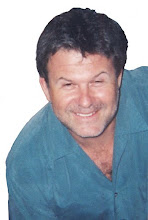
By ROBERT PRICE
Merle Haggard must occasionally hear that drunk guy in his sleep. More than a few times in his long and fruitful career, the Bakersfield-born singer has been on stage, warbling in his fine baritone, when some yokel in the back bellows, “Play ‘Okie’!”
And, more often than not, Haggard, writer of hundreds of gentle and poignant jazz-country ballads, will — dare I suggest reluctantly? — oblige. Sometimes Haggard’s most famous, profitable and career-solidifying song, the one that expressed disgust with smoking marijuana, burning draft cards and those “hippies out in San Francisco,” must seem like an insufferable relative who just doesn’t know when to go home.
Forty years ago today, “Okie From Muskogee” was at the peak of its power, smack dab in the middle of a four-week run at No. 1 on the country music charts. In the span of those few weeks, Haggard cemented himself in the top tier of American entertainers.
But looking back now on “Okie,” the populist anthem Haggard has said he wrote in 10 minutes, it’s clear the song was much more than that: It was, and remains, a signpost on America’s difficult and unfulfilled journey toward self-identity.
Almost immediately upon the song’s ascent to No. 1 in November 1969, “Okie From Muskogee” was regaled as the voice of the silent majority, a revitalizing tonic for conservatives who had grown defensive and angry over Vietnam and the counter-culture movement it had helped spawn.
Of course, Haggard had been covertly political for most of his career, so covert perhaps Haggard did not fully realize it himself. “I Take a Lot of Pride in What I Am,” “Hungry Eyes” and “Workin’ Man Blues,” among others, had already firmly positioned Haggard as a man with working-class, anti-elite, populist sentiments. To a great extent, “Okie” tracked that same course.
Sociologists, historians and assorted pundits (including cultural historian and former Californian reporter Peter LaChapelle, author of 2007’s “Proud to be an Okie”) have long debated the song’s meaning and intent. Was it a parody or a sincerely indignant jab at the LSD-tripping left? At various times, Haggard has suggested both.
Haggard had no inkling what he’d created until he played the song publicly for the first time: His unveiling, at a club for noncommissioned Army officers in Fort Bragg, N.C., inspired a response so passionately rowdy that Haggard, then 32, later admitted he’d momentarily feared for his life.
The song, recorded in Hollywood on July 17 and released in August, made Haggard one of the hottest concert commodities in the country. The Atlantic Monthly described one scene on Dayton, Ohio: “… Suddenly they are on their feet, berserk, waving flags and stomping and whistling and cheering … and for those brief moments the majority isn’t silent anymore.” As a single, the song sold 264,000 copies the first year, propelling Haggard to 1970 entertainer of the year awards from both the Academy of Country Music and Country Music Association.
Some critics decried the song’s ultraconservatism; others tried to rehabilitate the song by reading it as a populist, working-class assault on middle-class snobbery and elitism. It became perhaps the most parodied songs of the Vietnam era, inspiring left-of-center knockoffs by Kinky Friedman and the Texas Jewboys (“Asshole From El Paso”), Commander Cody and His Lost Planet Airmen, and Arlo Guthrie. So many country, rock and country-rock groups released transmogrified versions of “Okie” that Rolling Stone magazine kept score: As of March 1971, the song had been recorded 20 times, with the tally standing at “Honkies, 12, Hippies, 8.”
In the context of Haggard’s lifelong body of work, it’s clear that when Haggard saw protesting college students, he didn’t just see disrespect for flag and country, he saw class distinction and privilege. He saw trust-fund snot-noses who’d never stooped over a row of cotton in their lives, never seen dirt under their own fingernails. The marijuana was one thing — and maybe not such a big thing at that — but the naïveté was quite another. If the literal weight of the lyrics was an indication, the song was less about Vietnam than about class dignity. After all, “I’m proud to be an Okie” is the song’s most repeated line.
Eventually Haggard began expressing misgivings about the song’s tendency to brand him a reactionary, preferring to explain it simply as a statement of Okie pride. When Haggard spoke at the “Oildale and Beyond” history symposium at Cal State Bakersfield Nov. 7, that was the interpretation he shared.
But conservative politicians identified a natural constituency in country music fans, and their efforts to exploit it during the Vietnam era featured Merle Haggard.
Sometimes Haggard allowed it: He of course gratefully accepted Gov. Ronald Reagan’s 1970 pardon for crimes that eventually led to his incarceration at San Quentin Prison in the late 1950s. And he accepted Richard Nixon’s invitation to the White House in 1973 to sing at wife Pat’s staid birthday party. But Haggard refused to endorse George Wallace when the Alabama governor and presidential aspirant — who was already campaigning with country-music singers singers Ernest Tubb and Marty Robbins — asked for his support in 1972. Years later he rejected similar overtures from one-time U.S. Senate candidate David Duke, the ex-Klansman.
Eventually Haggard came to the conclusion that protest “wasn’t un-American” after all. Those young Vietnam-era protesters, he told interviewer Deke Dickerson, could “see through our bigotry and our hypocrisy. ... I believe history has proven them right.”
By 2007, Haggard had moved to the center-left, if his salute to then-presidential candidate (and longtime conservative target) Hillary Clinton was an indication: “This country needs to be honest; Changes need to be large; Something like a big switch of gender; Let’s put a woman in charge.”
But Haggard has never cared much for labels. Try to put a liberal pin on his lapel and risk that scowl. Maybe his political soul is best revealed in a lesser-known song, “Somewhere in Between,” recorded a short time after “Okie” but never released: “I stand looking at the left wing, and I turn towards the right; And either side don’t look too good, examined under light; That’s just freedom of opinion, and their legal right to choose; That’s one right I hope we never lose.”
Showing posts with label Okie from Muskogee. Show all posts
Showing posts with label Okie from Muskogee. Show all posts
Wednesday, November 25, 2009


Sunday, September 6, 2009
Blowing in from the west, a twangy memory of the past
The first song I ever learned on the guitar, back in my Petaluma parks and rec summer class, lo, those many years ago, was a response to Merle Haggard’s “Okie from Muskogee.”
It was Jesse Colin Young’s “Hippie from Olema,” an amusing retort sung to the tune of Haggard’s redneck anthem of conserva tive pride. Where Haggard had written, “We don’t grow our hair out long and shaggy,” the leader of the Youngbloods had written, “We don’t spill our oil out in the ocean.” I was subsisting on a steady sugar diet of AM radio pop at the time, but even I picked up on the serious cultural disconnect in evidence.
So when Amanda Eichstaedt e-mailed me a couple of months ago to ask about Bakersfield music, I couldn’t help but be distracted by the small irony attached to her return address: Olema. Yes, a resident of the original Hippieville, 20 miles through the west Marin backcountry from the stomping grounds of my bewildered youth, was writing to inquire about Merle Haggard and friends.
Eichstaedt and collaborator Mike Varley co-host an every-other-Thursday-evening program on KWMR, a charming, appealingly eclectic radio station in Point Reyes, just over the hill from Olema. The show is called “Bakersfield and Beyond,” and it’s worth bookmarking on your computer. (Go to kwmr.org and click on the cow icon to get streaming live audio of the two-hour show.)
Fans of Buck and Merle will find something to like here, but that’s not what makes “Bakersfield and Beyond” a great show. Eichstaedt and Varley may have come late to the Bakersfield Sound party, but they’ve managed to locate and restore a story line that, with a very few notable exceptions, petered out sometime in the mid-1970s.
The story line is this: A unique new genre of distinctly American music, born of folk, blues, Western swing and rockabilly, spiced with sweat, sunburn and a double helping of class resentment, finds a place in the broader popular consciousness. The Bakersfield Sound starts out as the music of independence and rebellion but, like so many other cultural insurgencies, it gradually evolves into a copy of the mainstream product, so indistinguishable it ceases to exist except in memory. Buck Owens himself lamented its passing.
But “Bakersfield and Beyond” reminds us that the spirit of that music is still kicking around — in expected places, like Austin, Texas, and L.A., but also in unexpected places like Calgary, Alberta, where singer-songwriter Tim Hus presses on the best traditions of Billy Mize and Tommy Collins.
And, thank God, in Bakersfield, too: Eichstaedt and Varley served up some Big House last Thursday (“Louisiana in the Rain”), as well as Fatt Katt and Von Zippers (“Rockin’ and Rollin’ Tonight”). Another local, Bruce Theissen, aka Dr. BLT, is a regular call-in guest; his astonishing, barely recognizable rendition of Michael Jackson’s “Billie Jean” a few weeks ago was lonely enough to have made Johnny Cash cry. No, seriously.
In November 2008, Eichstaedt, who already had an interview show on KWMR, was asked to cover the station’s Thursday night slot for four shows. She knew Varley through bicycling — Varley owns the local bike shop, and she is chairwoman of the board of the League of American Bicyclists, a national cycling advocacy group.
She knew their musical tastes were similar and vast, so she asked him to sit in with her. They pulled out some Dave Alvin and some John Doe & the Sadies — familiar names to anyone who frequents Bakersfield’s Fishlips club — along with Vancouver-based Neko Case, who toured with Haggard two years ago. Research helped them realize those performers had a lot in common with the Bakersfield Sound.
They didn’t know much about Bakersfield music, however, and they readily admitted it to their listening audience on that first broadcast. Was there really even such a thing? “Immediately we got a call from a friend who could not believe that, a) we did not know what the Bakersfield Sound was, and, b) we would actually admit it on the air,” Eichstaedt wrote in a recent e-mail.
In the eight months since their debut, they’re uncovered quite a few of Bakersfield’s musical progeny. But they’ve also fallen in love with Rose Maddox, Little Jimmy Dickens, Wanda Jackson and Ferlin Husky, in addition to Buck and Merle.
Depending on how you define the Bakersfield Sound, they might now know more about the genre now than any living man or woman, including those who lived it. Not that they would ever make such a boast: They are properly humble and self-deprecating about their new-found expertise. And now that they’ve actually visited Mecca — last month they caught Dave Alvin and the Guilty Women at Fishlips and Buddy Owens and the Buckaroos at the Crystal Palace — they may qualify for Ph.D’s in honky tonk.
Meanwhile, in Bakersfield, the city’s lone country station plays Nashville hits, and half the dial is given over to hip-hop. Son Volt? Rosie Flores? Who are they? To a far greater extent than we might want to admit, Bakersfield has lost an important part of its musical identity. Fortunately, others have found pleasing remnants of it. Even a couple of bike-riding hippies from Olema.
Reach Robert Price at rprice@bakersfield.com or www.stubblebuzz.com.
It was Jesse Colin Young’s “Hippie from Olema,” an amusing retort sung to the tune of Haggard’s redneck anthem of conserva tive pride. Where Haggard had written, “We don’t grow our hair out long and shaggy,” the leader of the Youngbloods had written, “We don’t spill our oil out in the ocean.” I was subsisting on a steady sugar diet of AM radio pop at the time, but even I picked up on the serious cultural disconnect in evidence.
So when Amanda Eichstaedt e-mailed me a couple of months ago to ask about Bakersfield music, I couldn’t help but be distracted by the small irony attached to her return address: Olema. Yes, a resident of the original Hippieville, 20 miles through the west Marin backcountry from the stomping grounds of my bewildered youth, was writing to inquire about Merle Haggard and friends.
Eichstaedt and collaborator Mike Varley co-host an every-other-Thursday-evening program on KWMR, a charming, appealingly eclectic radio station in Point Reyes, just over the hill from Olema. The show is called “Bakersfield and Beyond,” and it’s worth bookmarking on your computer. (Go to kwmr.org and click on the cow icon to get streaming live audio of the two-hour show.)
Fans of Buck and Merle will find something to like here, but that’s not what makes “Bakersfield and Beyond” a great show. Eichstaedt and Varley may have come late to the Bakersfield Sound party, but they’ve managed to locate and restore a story line that, with a very few notable exceptions, petered out sometime in the mid-1970s.
The story line is this: A unique new genre of distinctly American music, born of folk, blues, Western swing and rockabilly, spiced with sweat, sunburn and a double helping of class resentment, finds a place in the broader popular consciousness. The Bakersfield Sound starts out as the music of independence and rebellion but, like so many other cultural insurgencies, it gradually evolves into a copy of the mainstream product, so indistinguishable it ceases to exist except in memory. Buck Owens himself lamented its passing.
But “Bakersfield and Beyond” reminds us that the spirit of that music is still kicking around — in expected places, like Austin, Texas, and L.A., but also in unexpected places like Calgary, Alberta, where singer-songwriter Tim Hus presses on the best traditions of Billy Mize and Tommy Collins.
And, thank God, in Bakersfield, too: Eichstaedt and Varley served up some Big House last Thursday (“Louisiana in the Rain”), as well as Fatt Katt and Von Zippers (“Rockin’ and Rollin’ Tonight”). Another local, Bruce Theissen, aka Dr. BLT, is a regular call-in guest; his astonishing, barely recognizable rendition of Michael Jackson’s “Billie Jean” a few weeks ago was lonely enough to have made Johnny Cash cry. No, seriously.
In November 2008, Eichstaedt, who already had an interview show on KWMR, was asked to cover the station’s Thursday night slot for four shows. She knew Varley through bicycling — Varley owns the local bike shop, and she is chairwoman of the board of the League of American Bicyclists, a national cycling advocacy group.
She knew their musical tastes were similar and vast, so she asked him to sit in with her. They pulled out some Dave Alvin and some John Doe & the Sadies — familiar names to anyone who frequents Bakersfield’s Fishlips club — along with Vancouver-based Neko Case, who toured with Haggard two years ago. Research helped them realize those performers had a lot in common with the Bakersfield Sound.
They didn’t know much about Bakersfield music, however, and they readily admitted it to their listening audience on that first broadcast. Was there really even such a thing? “Immediately we got a call from a friend who could not believe that, a) we did not know what the Bakersfield Sound was, and, b) we would actually admit it on the air,” Eichstaedt wrote in a recent e-mail.
In the eight months since their debut, they’re uncovered quite a few of Bakersfield’s musical progeny. But they’ve also fallen in love with Rose Maddox, Little Jimmy Dickens, Wanda Jackson and Ferlin Husky, in addition to Buck and Merle.
Depending on how you define the Bakersfield Sound, they might now know more about the genre now than any living man or woman, including those who lived it. Not that they would ever make such a boast: They are properly humble and self-deprecating about their new-found expertise. And now that they’ve actually visited Mecca — last month they caught Dave Alvin and the Guilty Women at Fishlips and Buddy Owens and the Buckaroos at the Crystal Palace — they may qualify for Ph.D’s in honky tonk.
Meanwhile, in Bakersfield, the city’s lone country station plays Nashville hits, and half the dial is given over to hip-hop. Son Volt? Rosie Flores? Who are they? To a far greater extent than we might want to admit, Bakersfield has lost an important part of its musical identity. Fortunately, others have found pleasing remnants of it. Even a couple of bike-riding hippies from Olema.
Reach Robert Price at rprice@bakersfield.com or www.stubblebuzz.com.
Subscribe to:
Posts (Atom)